Forward Future Tools Library

Agentmemory logo

Agentmemory

Agentmemory gives coding agents persistent, reviewable memory for repository decisions, procedures, errors, and handoffs, with MCP and REST access for solo developers and engineering teams.

Try Agentmemory →

agentmemory.space·From $49/mo·Checked 2026-10-13
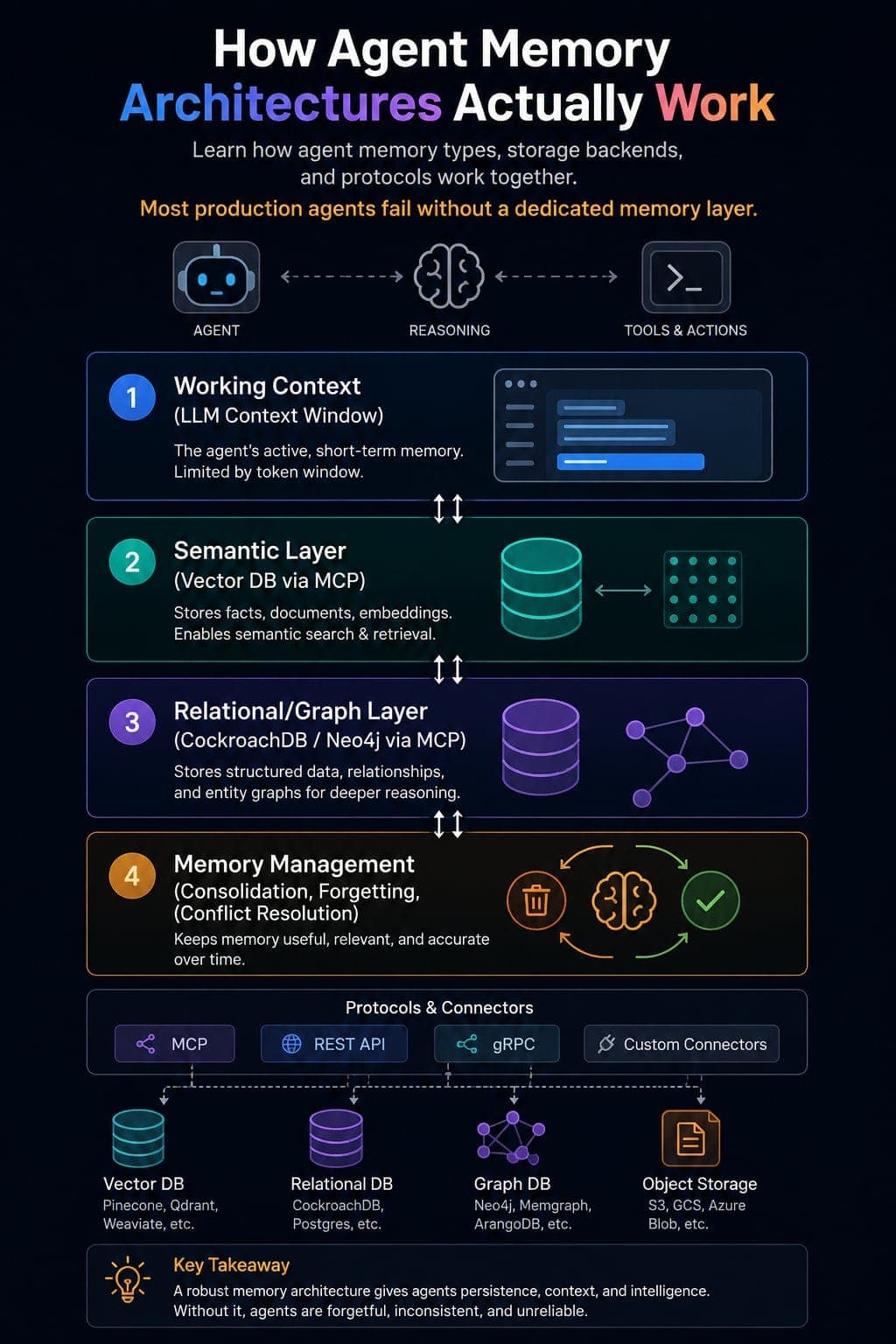
How Agent Memory Architectures Really WorkHow agentmemory works, and how to actually use it to with your agentagentmemory/agentmemoryAgentMemory Capture
How Agent Memory Architectures Really Workboring-cow.com
How Agent Memory Architectures Really Work
How Agent Memory Architectures Really Workboring-cow.com

›What is Agentmemory?

Agentmemory is a hosted memory workspace for AI coding agents and MCP tools. It captures session outcomes, decisions, errors, and handoff notes, then retrieves relevant context using keyword, vector, freshness, and relationship signals. Teams can review, pin, expire, delete, export, and share memory across repositories.

›What are the pros and cons of Agentmemory?

Strengths

Supports Claude Code, Codex, Cursor, OpenAI agent workflows, MCP tools, and REST clients
Combines automatic capture with human review and memory lifecycle controls
Team plan includes shared memory, pinned memories, source traces, analytics, and retention controls
Hosted operation includes billing, monitoring, analytics, support, and deployment

Trade-offs

Annual billing is selected by default, while month-to-month billing costs more
Shared team memory starts with the $149/mo Team plan rather than the Solo plan
Advanced governance, an SSO-ready account model, and custom retention and export support are reserved for Enterprise

›What are Agentmemory’s key features?

Automatic capture of agent outcomes, decisions, errors, and handoff notes
Hybrid recall using keyword, vector, freshness, and relationship signals
MCP and REST access for Claude Code, Codex, Cursor, OpenAI agents, and internal runners
Memory governance with review, pinning, expiration, deletion, and export controls
Shared team memory with scoped operator preferences and sensitive notes
First-party analytics, retention controls, and source traces on the Team plan

›What are the best use cases for Agentmemory?

Carry repository decisions and deployment warnings from one coding-agent session into the next
Give multiple agents a shared record of reviewed project knowledge across active repositories
Preserve safe commands, implementation procedures, review notes, and corrected user preferences
Review and approve captured memories before promoting them to team context
Connect internal coding-agent runners to a shared memory workspace through MCP or REST

›What is the pricing for Agentmemory?

PlanPriceDetails
Solo Memory$49/moFor 1 operator, with a private memory workspace, automatic session summaries, MCP and REST access, and memory export and delete controls.
Team Memory$149/moIncludes 5 seats, shared team memory, a review queue, pinned memories, hybrid recall with source traces, analytics, priority support, and retention controls.
Enterprise Memory$399/moIncludes advanced governance workflow, an SSO-ready account model, a dedicated onboarding session, and custom retention and export support.

Annual billing is selected by default and saves 50% versus month-to-month. The listed annual totals are $588 for Solo, $1788 for Team, and $4788 for Enterprise.

Checked 2026-10-13 · source

›Who is Agentmemory best for?

developersA fit for developers who want coding agents to retain repository decisions, procedures, and session context.
soloSolo builders can use the private workspace and automatic summaries to continue work across agent sessions.
small teamSmall engineering teams get shared memory, review controls, source traces, and five included seats on Team Memory.
enterpriseEnterprise buyers get governance workflows, an SSO-ready account model, onboarding, and custom retention and export support.
Not for
  • Teams looking for a free or self-hosted runtime rather than a paid hosted memory workspace.
  • Organizations that need advanced governance, SSO-ready accounts, or custom retention and export support without the Enterprise plan.
  • Buyers who do not need persistent memory across coding-agent sessions or shared repository context.


›What are the best Agentmemory alternatives?

›Where can I try Agentmemory?

Open agentmemory.space →