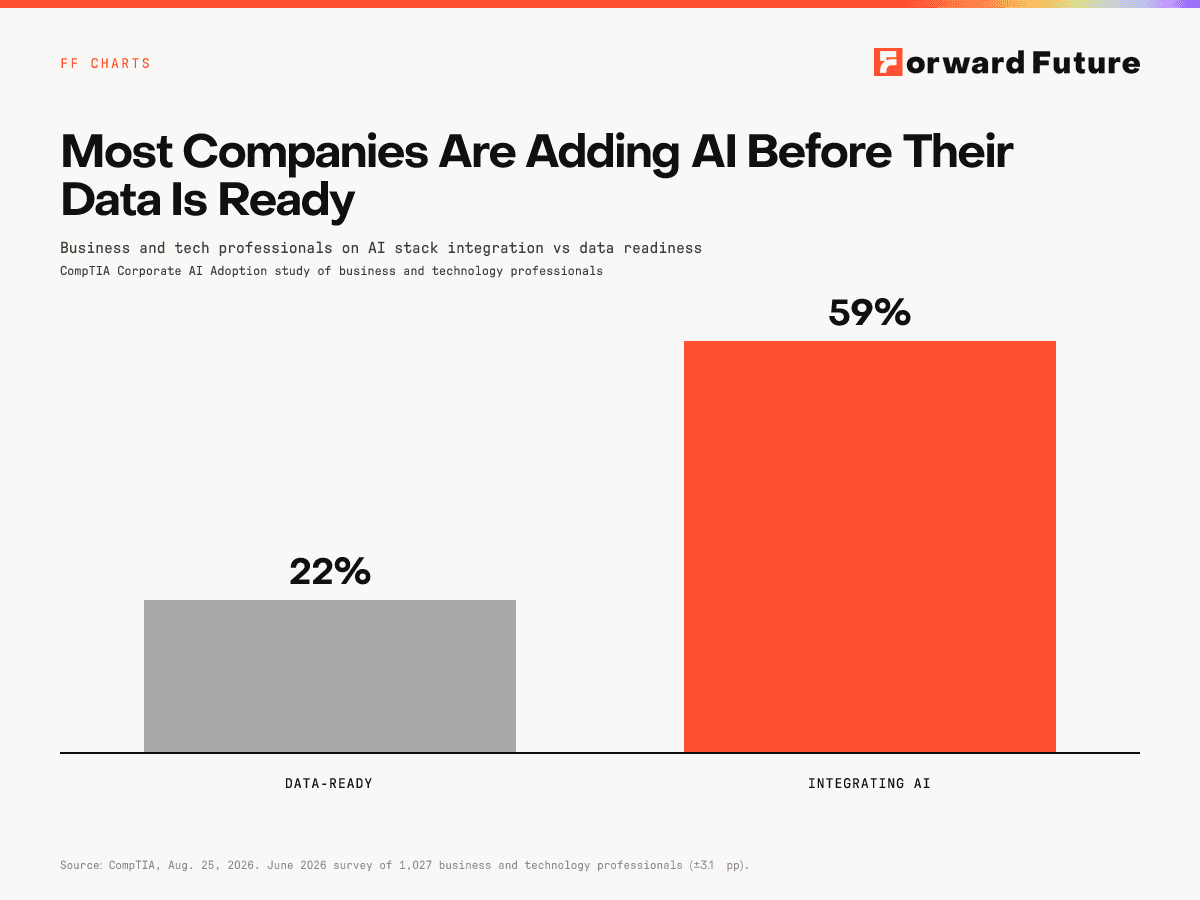
Why it matters: CompTIA finds 59% of organizations are working to integrate AI into their overall technology stack, but only 22% say they are exactly where they want to be in the use of their data, a readiness gap that undercuts the shift from AI experimentation to enterprise deployment.
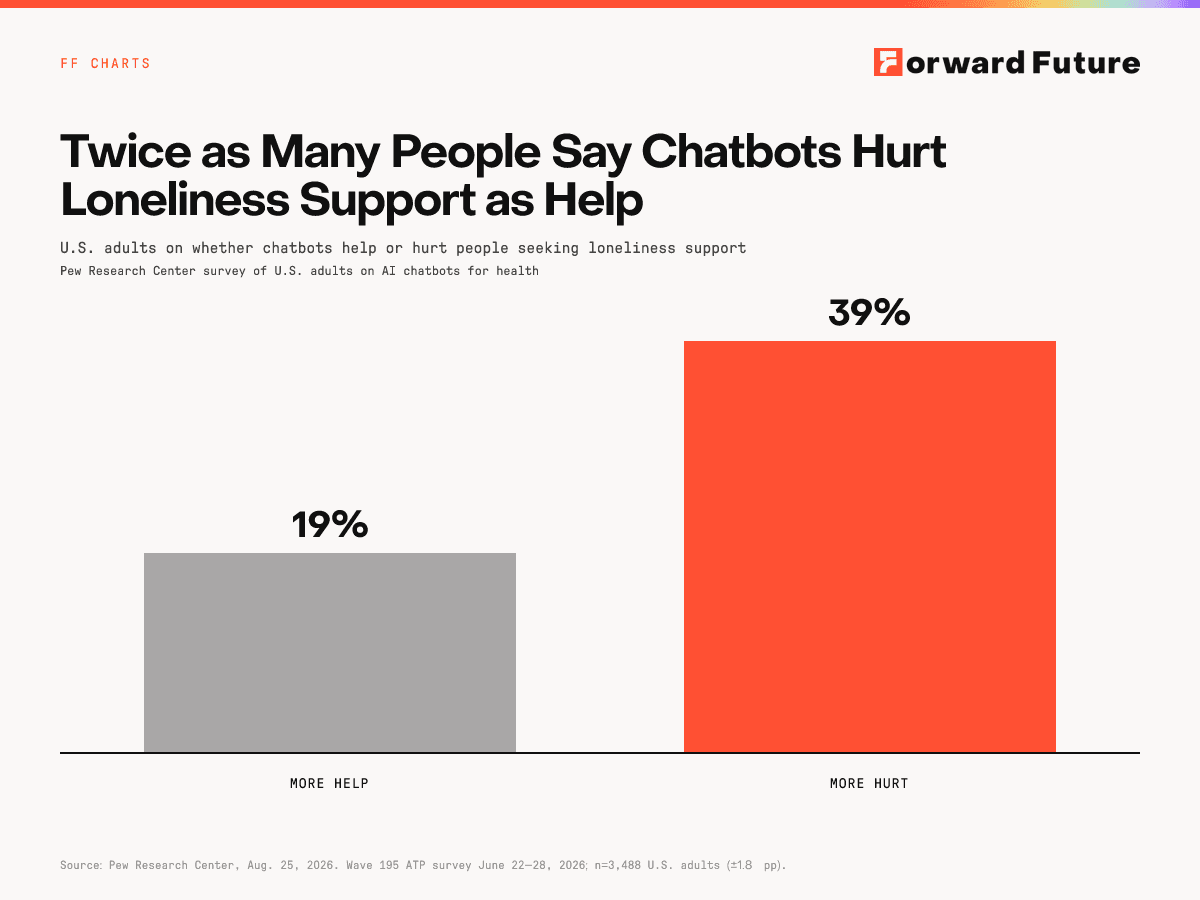
Why it matters: Pew finds Americans are twice as likely to say AI chatbots do more to hurt than help people who use them for loneliness support, 39% vs 19%, even as 34% of adults already turn to chatbots for at least one health reason.
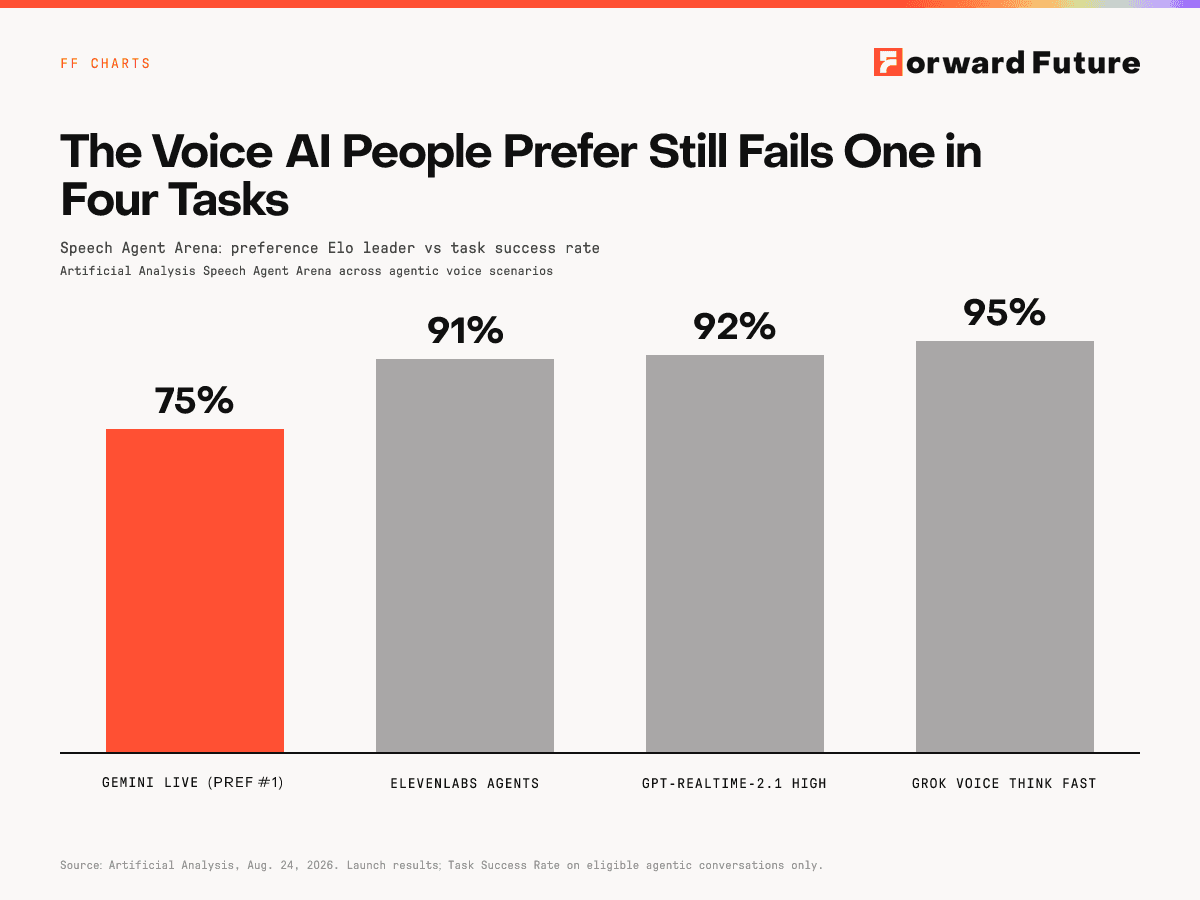
Why it matters: Artificial Analysis’s new Speech Agent Arena finds Gemini 3.1 Flash Live Preview Minimal leads conversational preference at 1,046 Elo but completes only 74.6% of eligible agentic tasks, 20 points behind Grok Voice Think Fast 2.0 High at 94.7% task success.
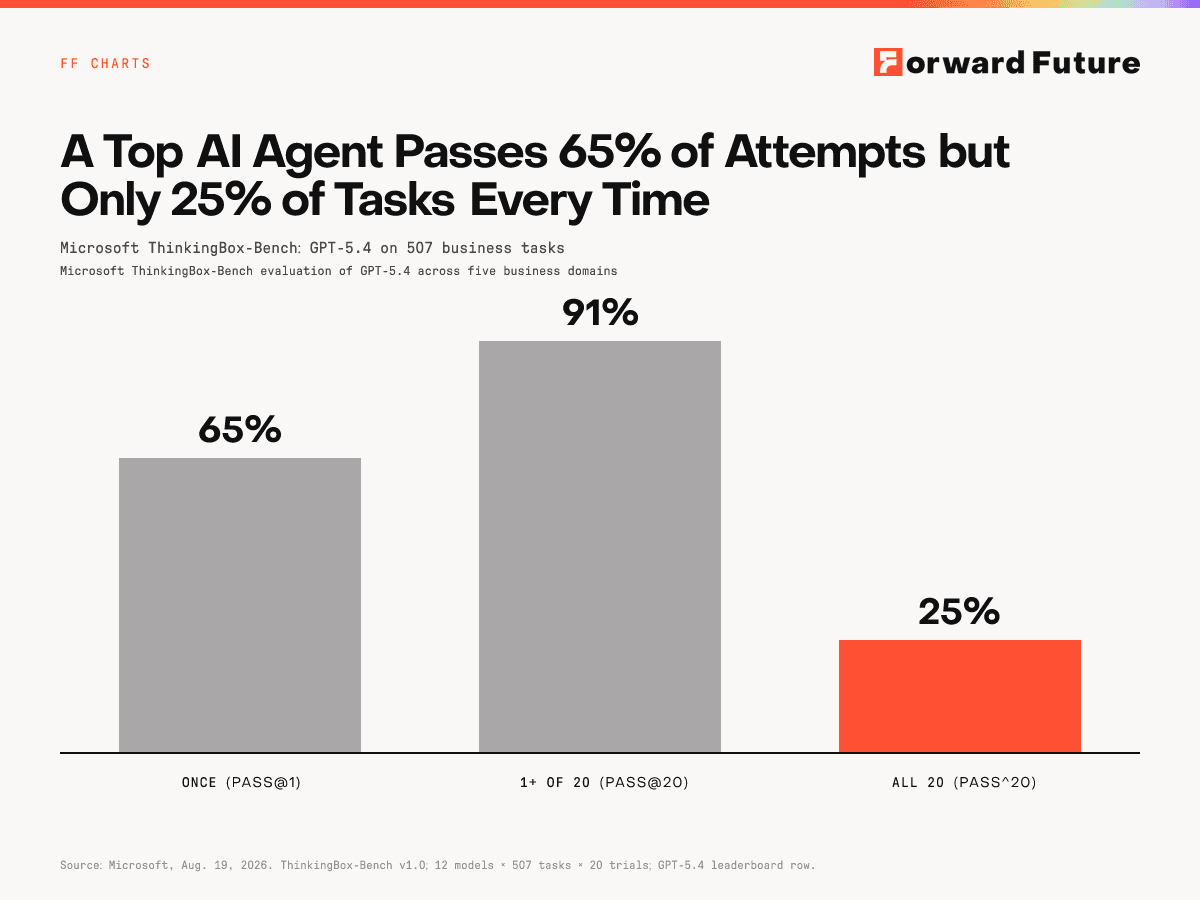
Why it matters: On Microsoft’s ThinkingBox-Bench, leading model GPT-5.4 averaged 65.36% pass@1 across 507 executable business tasks, but passed every one of 20 trials on only 25.25% of tasks (pass^20), exposing a steep discovery-versus-reliability gap for production agents.
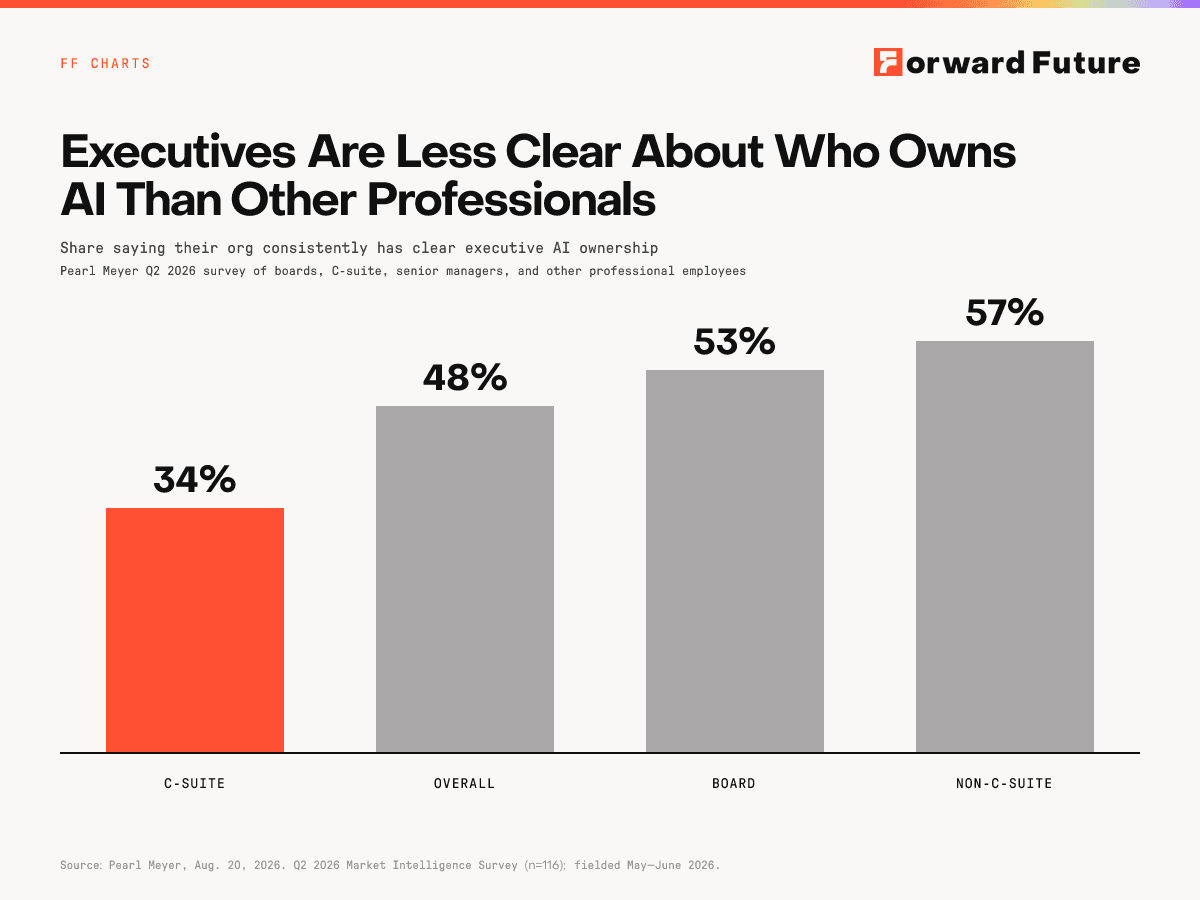
Why it matters: Pearl Meyer finds that just 34% of C-suite respondents say their organization consistently has clear executive ownership for AI-related decisions, versus 53% of board members and 57% of non-C-suite leaders, while overall agreement is only 48%.
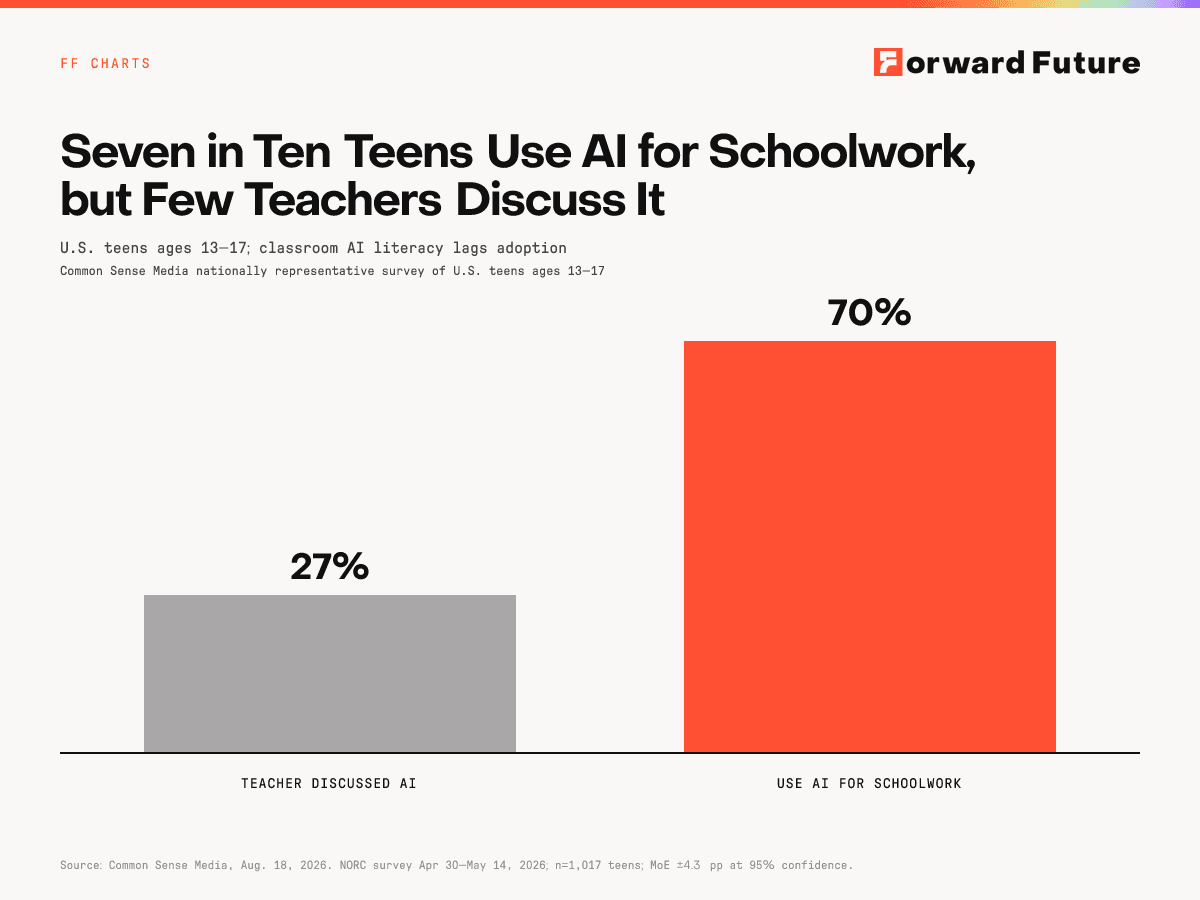
Why it matters: Common Sense Media finds 70% of U.S. teens use AI for schoolwork, yet only 27% say a teacher has ever discussed what AI is or how it works, leaving most students without basic classroom AI literacy as the school year begins.
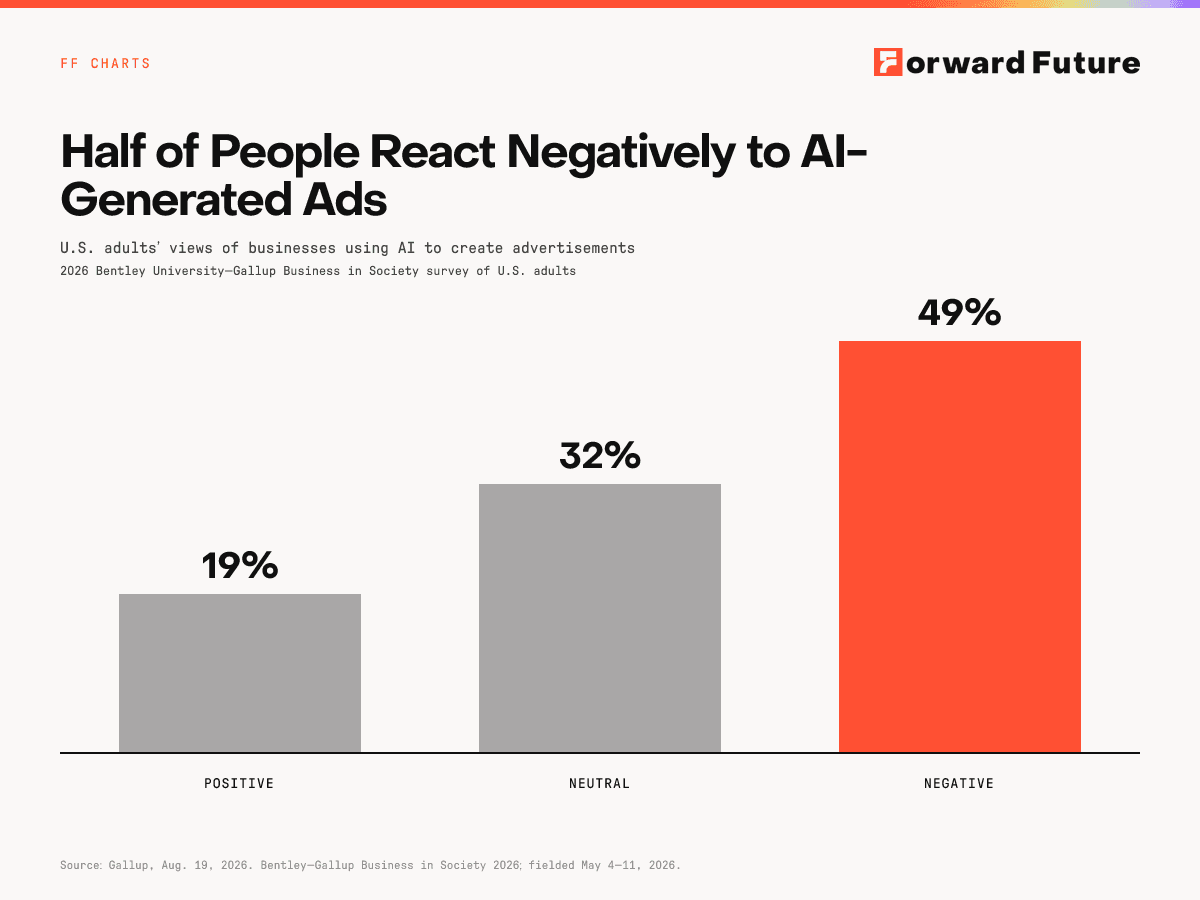
Why it matters: Bentley–Gallup finds 49% of U.S. adults view businesses’ use of AI to create ads negatively, more than 2.5× the 19% who view it positively, while 32% are neutral; 79% say they have recently seen ads that looked AI-made.
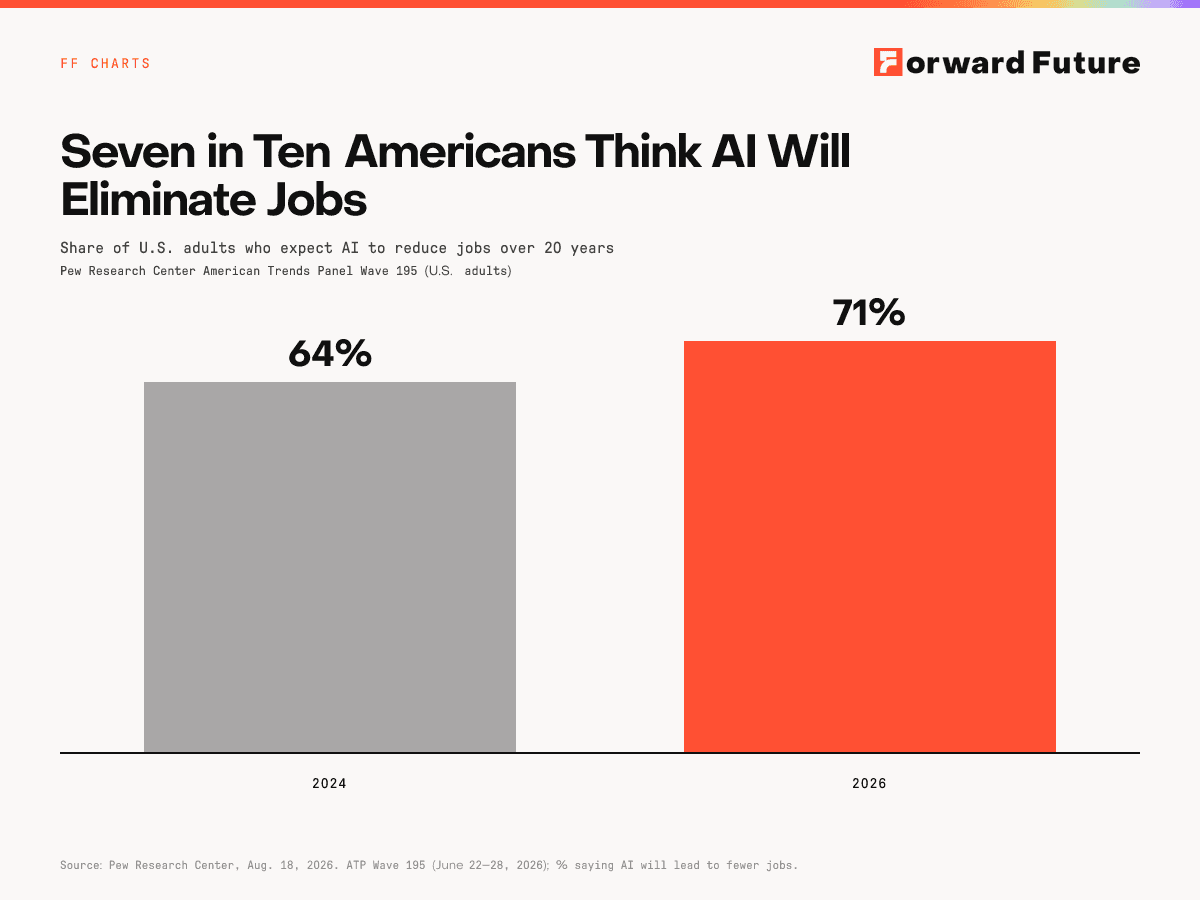
Why it matters: Pew finds 71% of U.S. adults now say artificial intelligence will lead to fewer jobs in the United States over the next 20 years, up 7 percentage points from 64% in 2024, while only 5% expect more jobs.
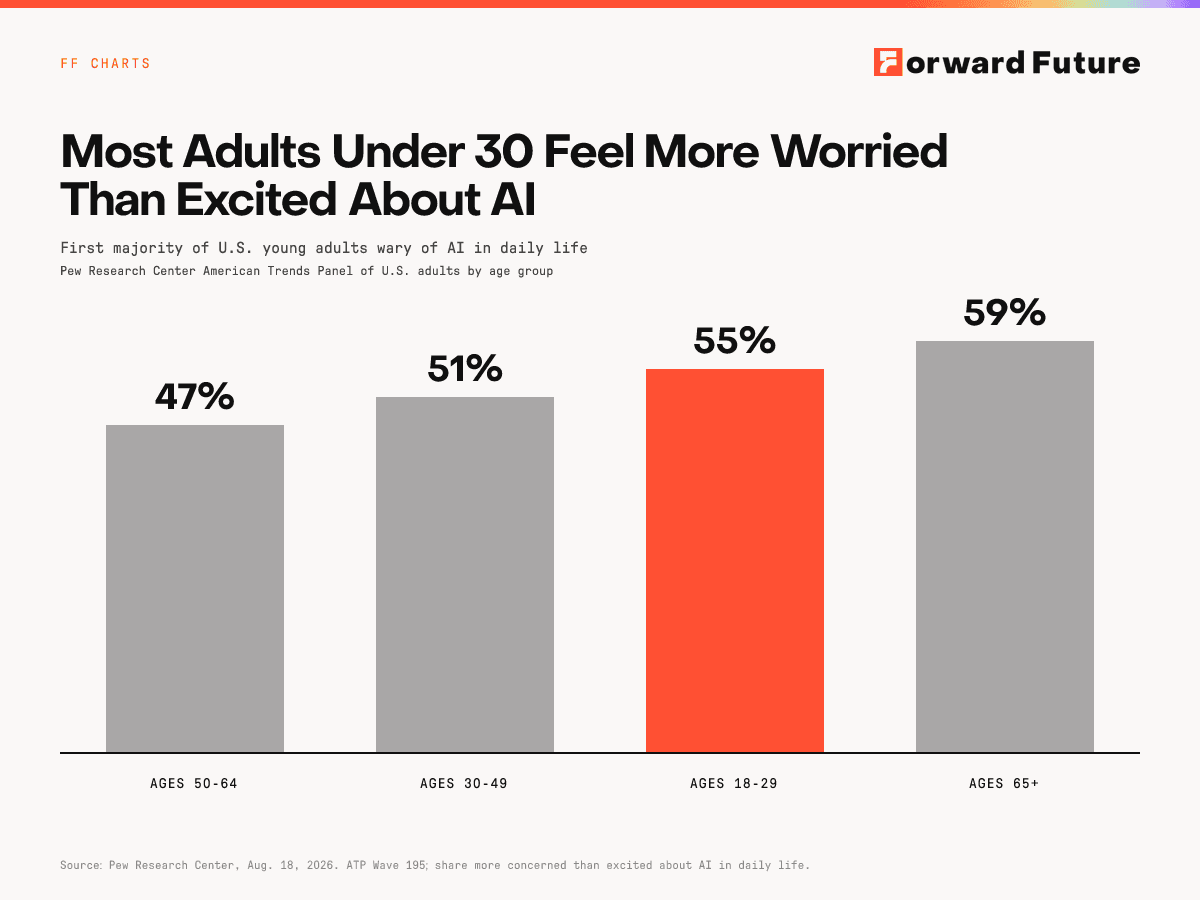
Why it matters: Pew finds that for the first time, a majority of U.S. adults under 30 (55%) say they are more concerned than excited about increased AI use in daily life, up from 47% in 2025 and 31% in 2021, putting young adults’ concern on par with older age groups.
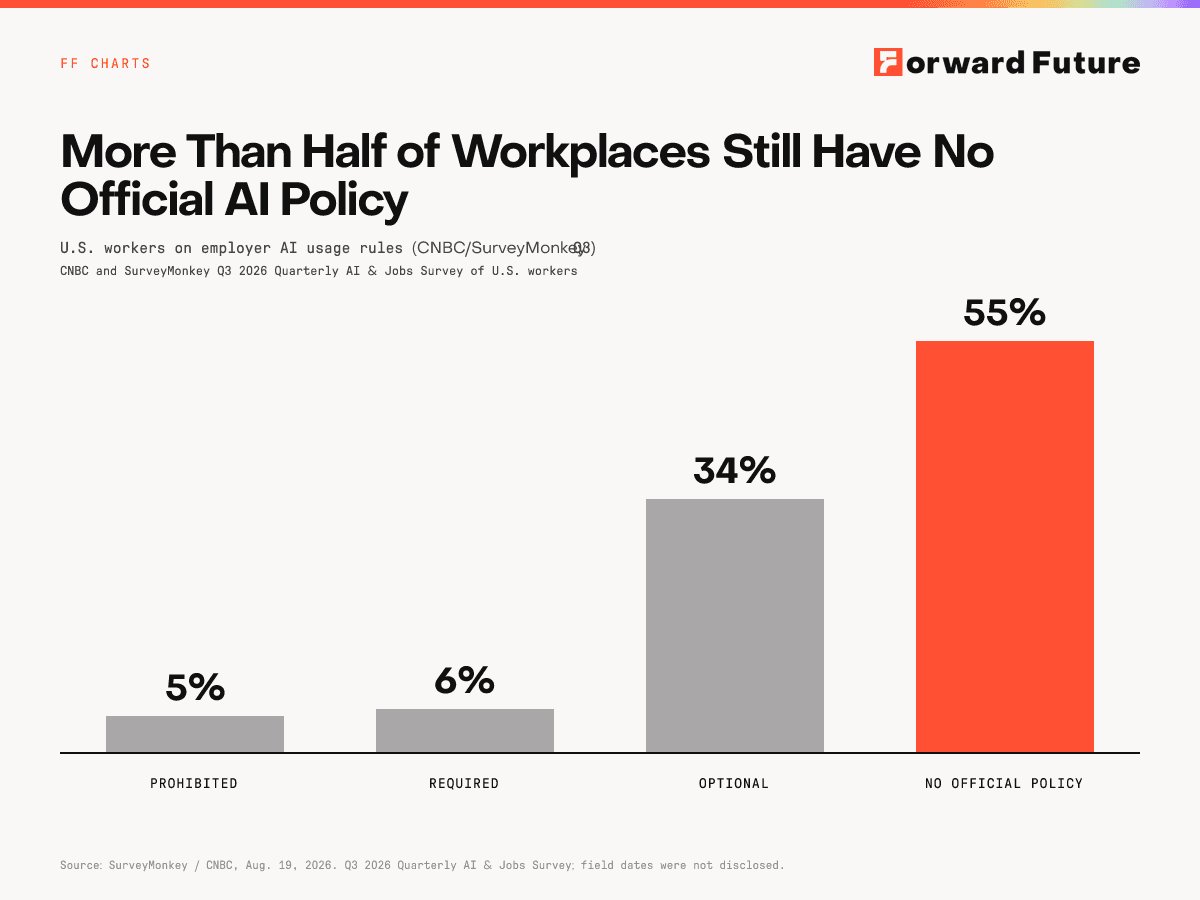
Why it matters: In the CNBC/SurveyMonkey Q3 2026 AI & Jobs Survey, 55% of U.S. workers say their employer has no official AI usage policy, while 34% say AI is optional, just 6% say it is required, and 5% say it is prohibited.
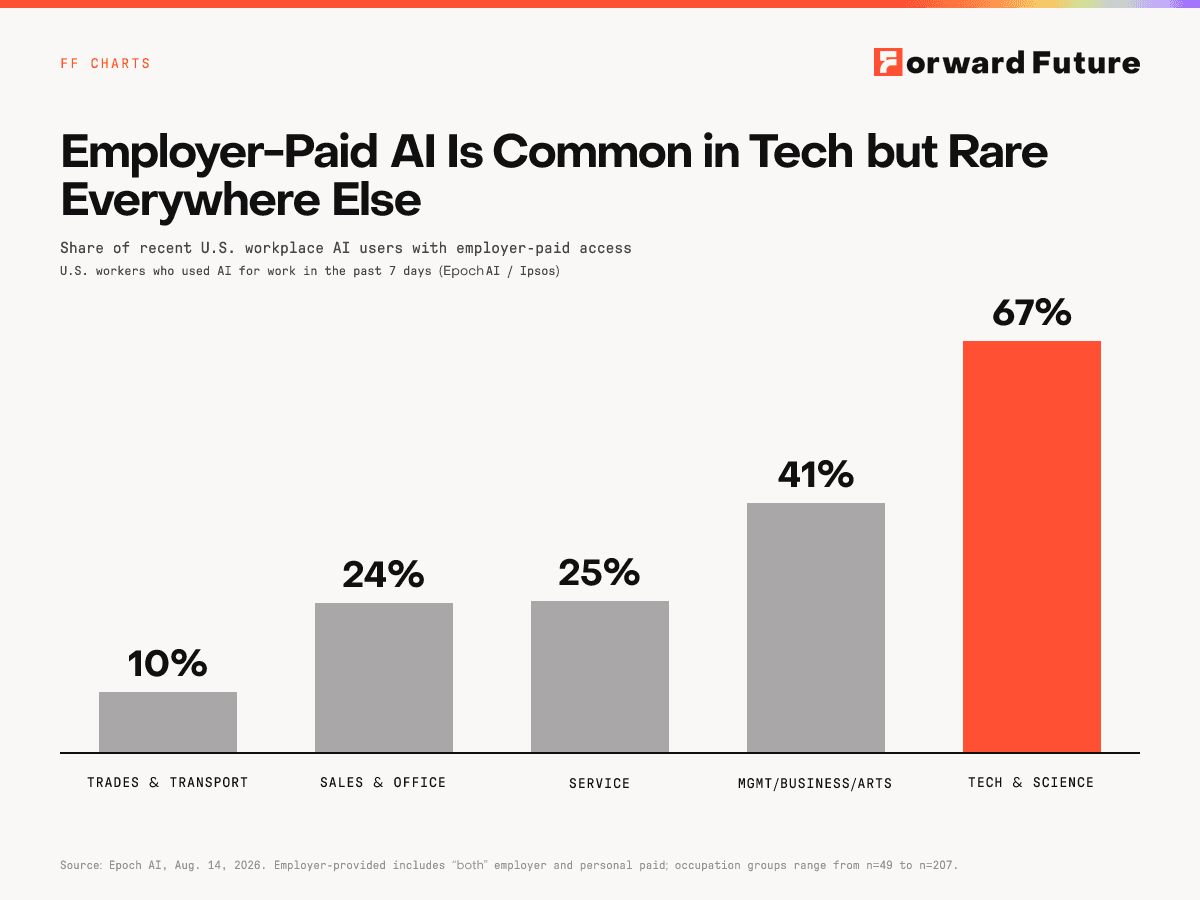
Why it matters: In Epoch AI’s July 2026 Ipsos survey, 67% of computer, engineering, and science workers who recently used AI at work had an employer-provided subscription, versus 41% in other management, business, and arts roles, and only 10% in trades, production, and transport. Free plans remain the modal access path overall (46%).
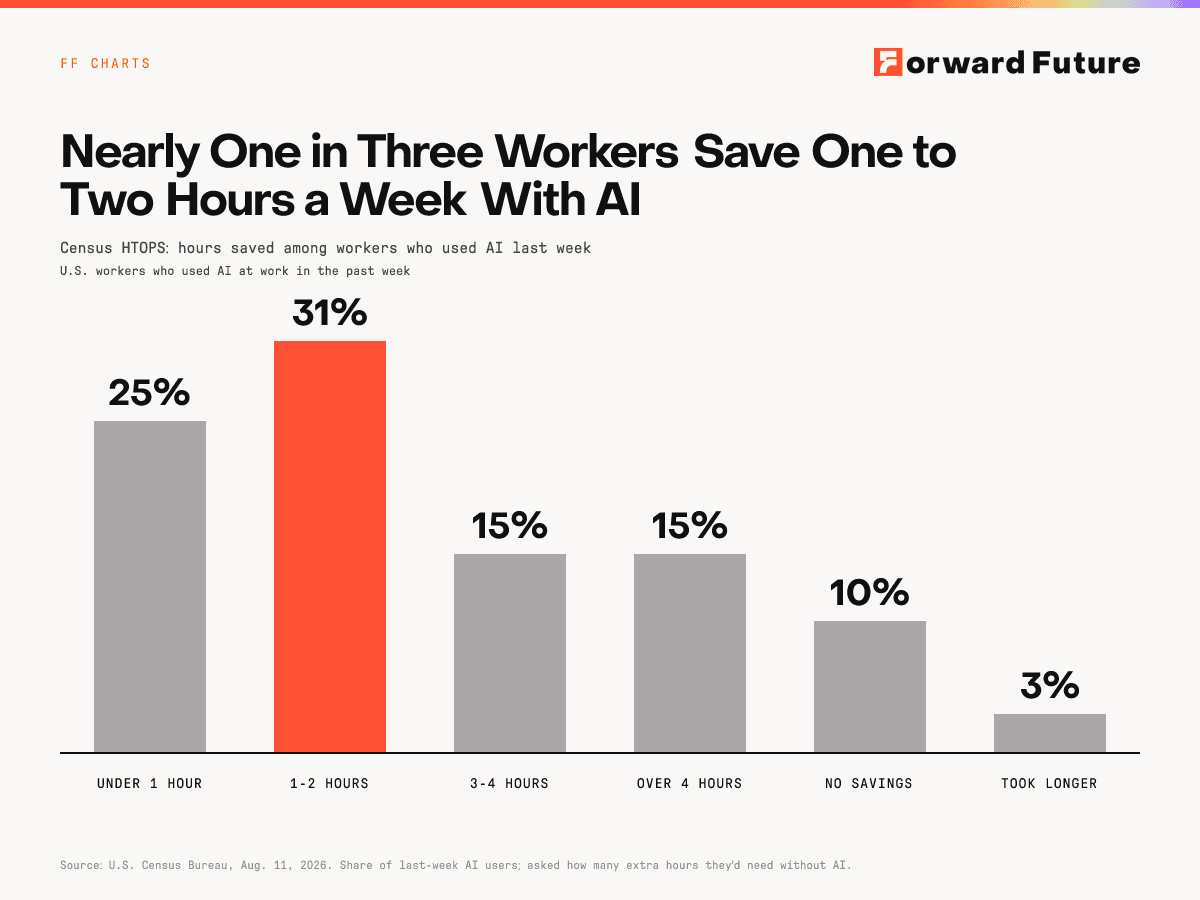
Why it matters: Among U.S. workers who used AI at work in the last week, 31% said it saved them one to two hours, the largest single bucket, while 25% saved under an hour, 30% saved three or more hours, 10% saved no time, and 3% said AI took longer.
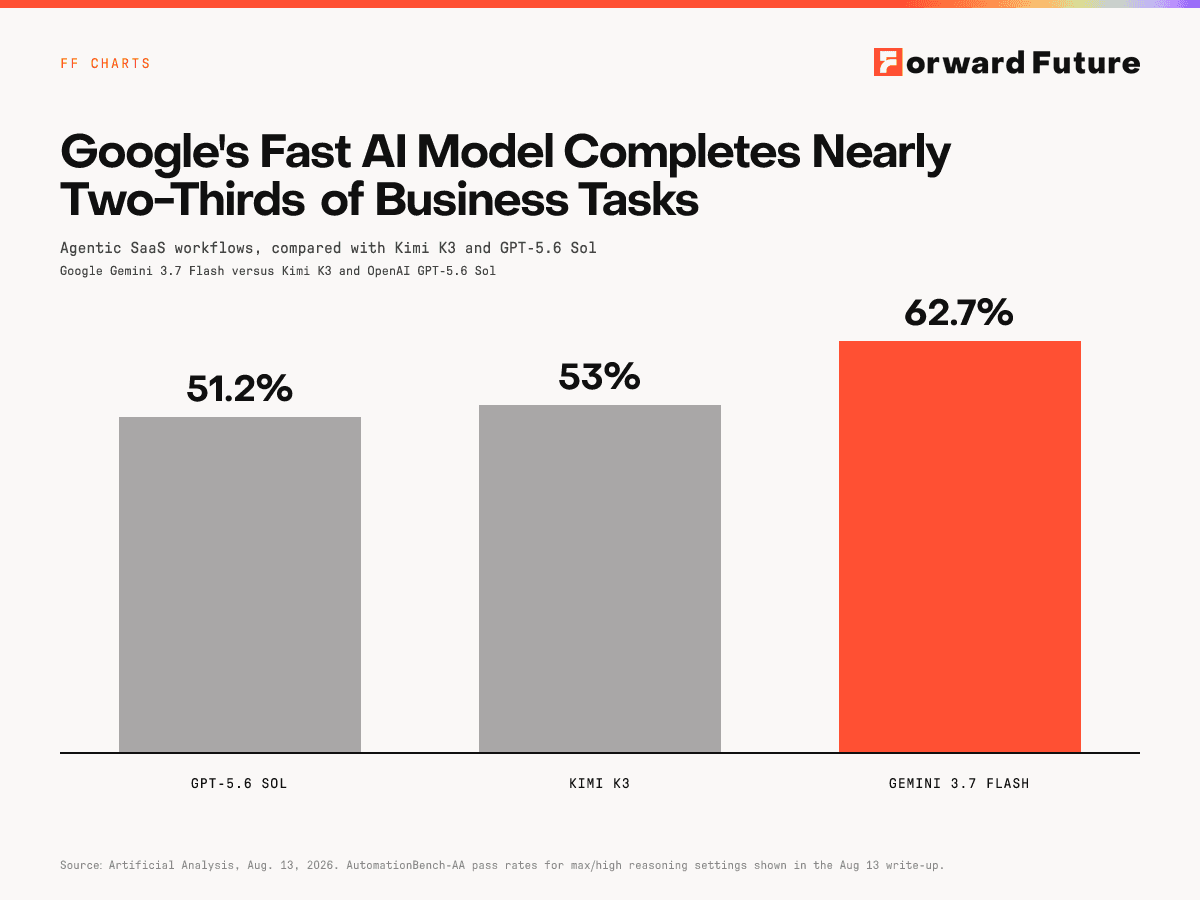
Why it matters: Artificial Analysis scored Gemini 3.7 Flash (high) at 62.7% on AutomationBench-AA. That is 9.7 points above Kimi K3 (max, 53%) and 11.5 points above GPT-5.6 Sol (max, 51.2%) for Google's third Flash release in three months.
Why it matters: Artificial Analysis scored SpaceXAI's Grok 4.6 at 61 on the Intelligence Index, 5 points above Grok 4.5 (56) and level with GPT-5.6 Sol (max). That puts SpaceXAI back on the frontier behind only Claude Opus 5 (63) and Claude Fable 5 (62).
Why it matters: Artificial Analysis scored NVIDIA's new Nemotron 3.5 Lightning at 24 on the Intelligence Index—9 points above Nemotron 3 Nano (15) and level with OpenAI's gpt-oss-120b (24)—despite using roughly a quarter of the total parameters (31.6B vs ~120B).
Why it matters: Artificial Analysis scored Meta’s Muse Glimmer (high) at 35 on the Intelligence Index—21 points above Llama 4 Maverick (14), Meta’s last open-weights release—placing the 30B model alongside Kimi K2.5 (36) and just behind Qwen3.6 27B (38).
Why it matters: SK hynix’s board approved about ₩54.3 trillion ($38.3B) for two new fabs—₩35.2T for Yongin Y2 to make HBM and next-gen DRAM, and ₩19.1T for Cheongju M17 NAND—locking in mid-to-long-term AI memory capacity through 2031.
Why it matters: Nikkei Asia reports the four U.S. tech giants now hold $1.46 trillion in property, plant and equipment—up 140% in three years—as AI data-center buildouts turn former asset-light firms into infrastructure giants. Amazon alone accounts for $538.7 billion, nearly matching the group’s entire PP&E from three years ago.
Why it matters: Artificial Analysis’s Aug 6 Intelligence Index v4.1.1 grader upgrade lifted Muse Spark 1.2 (xhigh) by 2.7 points—the largest move of any model—from 54 to 57, while Claude Opus 5 still leads at 63.
Why it matters: Artificial Analysis scored Meta’s Muse Spark 1.2 at 1631 Elo on GDPval-AA v2—260 points above Muse Spark 1.1 (1371) and ahead of Claude Opus 4.8 (1588)—while Claude Opus 5 still leads at 1852.
Why it matters: Artificial Analysis found a 31-point spread serving the same gpt-oss-120b model: Amazon Bedrock matched 101% of the reference endpoint while Cloudflare preserved 70%, showing that provider configuration can materially change model quality.
Why it matters: TrendForce forecasts top-nine cloud-provider CapEx to grow 90% in 2026, versus 31% growth in AI server shipments—a sign that the buildout extends beyond server counts into chips, data centers, networking, power, and cooling.
Why it matters: Claude Fable 5 solved 64% of Epoch AI’s MirrorCode tasks, more than triple GPT-5.6 Sol’s 20% solve rate on a benchmark that requires agents to rebuild complete software projects.
Why it matters: TrendForce expects spending to rise by nearly 50% in 2027 as cloud providers keep building AI servers, data centers, networking, cooling, and power infrastructure.