

Forward Future Tools Library

ClaudeBench Drift
ClaudeBench Drift turns historical pull requests and failed tickets into private coding-agent benchmarks for teams tracking regression, cost, time, and failure evidence.
claudebenchdrift.space·From $19.5 / mo·Checked 2026-09-29

›What is ClaudeBench Drift?
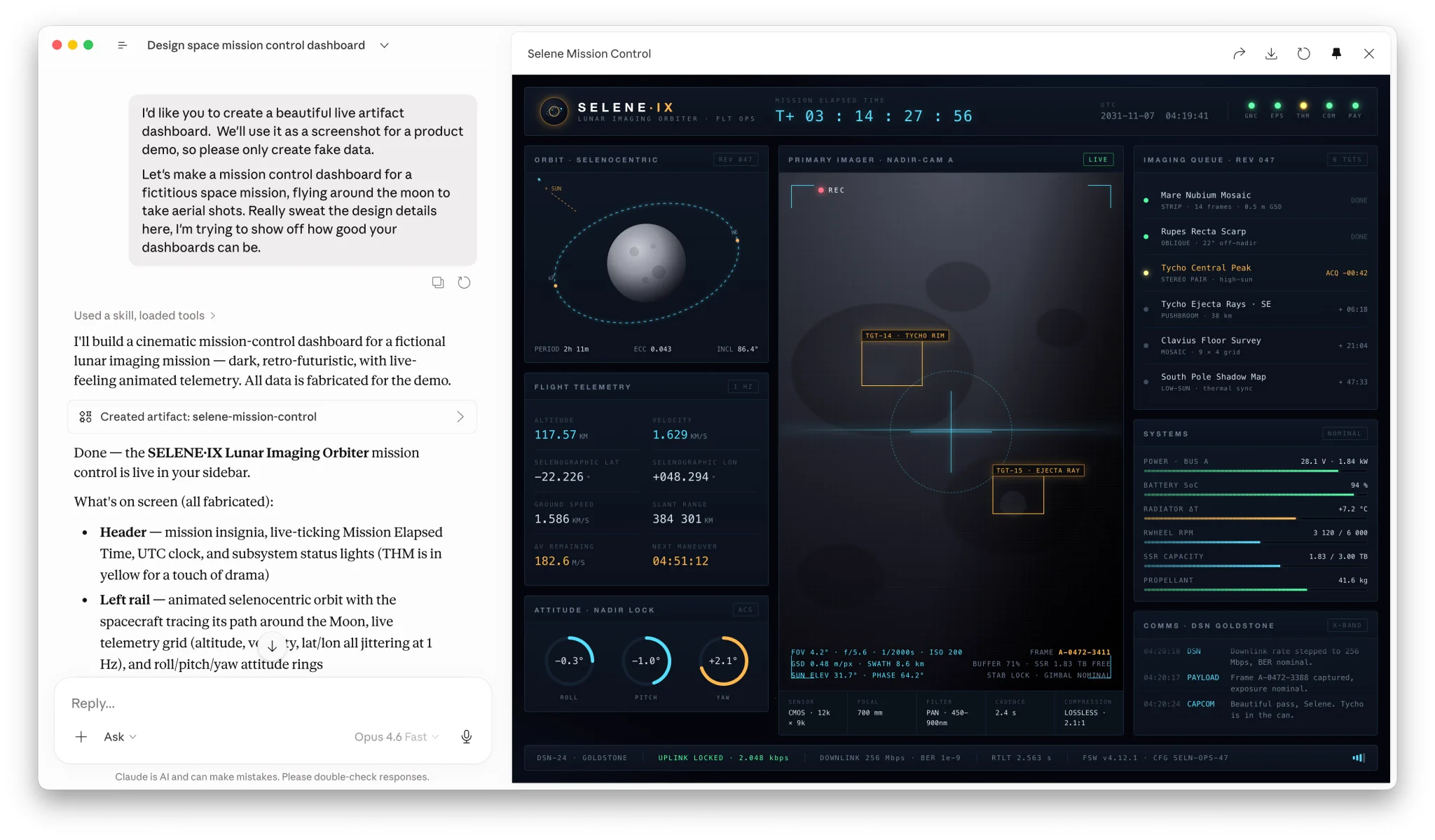
ClaudeBench Drift creates repeatable benchmarks from PRs, failed tickets, flaky test repairs, and review corrections. It runs Claude Code, Codex, Cursor, Gemini CLI, and OpenCode in sandboxed environments, then reports success rate, cost, elapsed time, drift, and failure reasons. Teams can compare runs after model, CLI, prompt, or tool changes.
›What are the pros and cons of ClaudeBench Drift?
Strengths
Trade-offs
›What are ClaudeBench Drift’s key features?
›What are the best use cases for ClaudeBench Drift?
›What is the pricing for ClaudeBench Drift?
| Plan | Price | Details |
|---|---|---|
| Dev | $19.5 / mo | One repo, 20 tasks, a private task seed set, weekly benchmark runs, and Claude Code and Codex comparison. |
| Team | $74.5 / mo | 20 repos, daily runs, cross-agent regression monitoring, model and CLI drift alerts, failure replay evidence, and a CTO and finance ROI report. |
| Fleet | $249.5 / mo | 100 repos, vendor reports, seat ROI portfolio reports, custom task taxonomy, sandbox policy controls, and vendor comparison exports. |
Annual billing is selected by default and billed at 50% off the month-to-month total. Dev is billed annually as $234, Team as $894, and Fleet as $2,994.
Checked 2026-09-29 · source
›Who is ClaudeBench Drift best for?
- Teams looking for a general-purpose coding assistant rather than a benchmark and regression-monitoring system.
- Teams without historical PRs, failed tickets, or task fixtures to turn into benchmark cases.
- Users who need a free plan or month-to-month pricing, since the listed plans use annual billing.
›What are the best ClaudeBench Drift alternatives?
 CodeAgent LedgerChoose this instead if the primary need is an audit trail for coding-agent work rather than recurring benchmark runs.→
 AI Review SignalChoose this instead if the main problem is measuring AI code-review quality and reviewer trust.→
 Ruflo AIChoose this instead if the priority is operating hosted multi-agent workspaces rather than evaluating agents against a private regression set.→
 Intelligence Per Watt→