
Forward Future Tools Library

Optimus Fintech logo

Optimus Fintech

Optimus unifies payment data, reconciles transactions, validates fees, and prepares financial-close data for enterprise finance and payment operations teams.

Try Optimus Fintech →

optimus.tech·Custom pricing·Checked 2026-09-02

Optimus Fintech screenshotInstall OptimusUI on LinuxOptimus AI Vision Platform for IndustryBrowse thousands of Optimus images for design inspirationProducts – Optimus Technologies Inc.
Optimus Fintechoptimus.tech
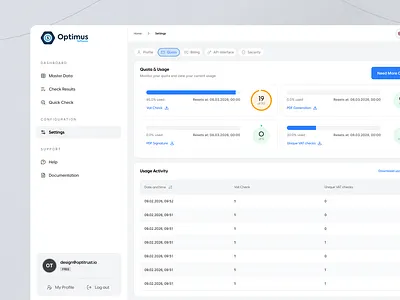
Optimus Fintech screenshot
Optimus Fintechoptimus.tech

›What is Optimus Fintech?

Optimus is a financial operations platform for global enterprises and financial institutions. It connects payment processors, banks, ERPs, and internal systems, then uses AI agents to match transactions, investigate exceptions, validate fees, prepare ledger entries, and support financial close. Its conversational interface answers questions over reconciled financial data.

›What are the pros and cons of Optimus Fintech?

Strengths

Connects fragmented processor, bank, ERP, and internal payment data in one financial model
Supports AI-assisted matching, exception investigation, and transaction-level drill-down
Includes fee validation and payment-cost analysis alongside reconciliation
Offers ledger posting, accounting controls, and financial-close workflows on higher plans
All plans include unlimited users, viewers, and approvers

Trade-offs

Pricing is based on monthly reconciled transaction volume and requires a sales quote
Foundation is limited to up to five data sources, while Velocity allows up to ten
Ledgering is unavailable on Foundation, and financial close is unavailable on Foundation and Velocity
Private-cloud, single-tenant deployment is available only on Infinity
The platform is designed for global enterprises and complex payment estates rather than simple bookkeeping workflows

›What are Optimus Fintech’s key features?

Data Fusion Agent that harmonizes payment data into a common financial model
AI-assisted reconciliation with N-way matching, exception workflows, and root-cause analysis
Fee validation that compares expected and actual charges and identifies overcharges and leakage
Automated ledgering with accounting rules, journal entry generation, ERP posting, and audit trails
Conversational AI Copilot for querying payment, fee, settlement, and exception data
Financial close support with reconciliation, certification, adjustments, and audit-ready evidence

›What are the best use cases for Optimus Fintech?

Reconcile transactions across payment service providers, banks, and ERPs
Find missed payments, chargebacks, fee overcharges, and other transaction leakages
Post payment activity to the ledger using configurable accounting rules
Monitor payment costs, effective rates, processor performance, and savings opportunities
Prepare close-ready datasets and investigate unreconciled balances across entities and currencies

›What is the pricing for Optimus Fintech?

PlanPriceDetails
FoundationContact salesUp to 5 data sources with core data fusion, configurable transaction matching, reconciliation reporting, fee validation, and standard cost dashboards.
VelocityContact salesUp to 10 data sources with AI reconciliation agents, advanced fee and rate validation, ledgering, ERP posting, and close-readiness features.
InfinityContact salesUnlimited data sources in a private cloud single-tenant environment, with multi-entity reconciliation, advanced ledgering, payment-cost optimization, and financial close.

Every plan is billed on monthly transaction volume. Users are unlimited, and pricing also reflects payment complexity and deployment requirements. Sales confirms the tier and provides a written quote after a scoping call.

Checked 2026-09-02 · source

›Who is Optimus Fintech best for?

enterpriseGlobal enterprises can use the higher tiers to manage multi-entity, multi-currency payment reconciliation and financial close.
payment operations teamsPayment operations teams get matching, exception handling, fee validation, cost monitoring, and ledger workflows in one platform.
finance teamsFinance teams handling multiple processors and complex payment estates can replace spreadsheet-based reconciliation with controlled, auditable workflows.
accounting teamsAccounting teams can use Velocity or Infinity for journal generation, ERP posting, transaction-to-GL lineage, and close preparation.
Not for
  • Small businesses seeking a self-serve accounting or reconciliation product with published subscription prices should look elsewhere.
  • Teams that need more than five data sources on the entry plan will need to move to Velocity or Infinity.
  • Organizations requiring private-cloud, single-tenant deployment must choose Infinity.

›What are the best Optimus Fintech alternatives?

›Where can I try Optimus Fintech?

Open optimus.tech →