

Forward Future Tools Library

Prisma
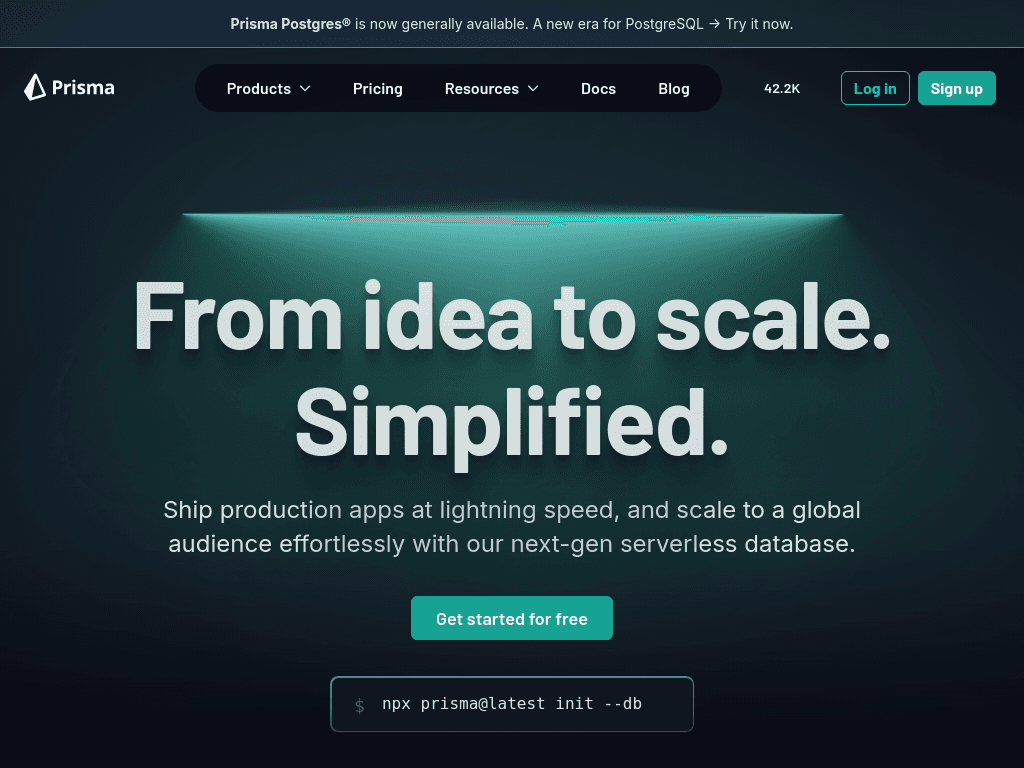
Prisma gives TypeScript developers schema-driven database access, managed PostgreSQL, and long-lived app deployment for APIs and AI agents.
Try Prisma →
prisma.io·Free + paid plans·Checked 2026-08-22
›What is Prisma?
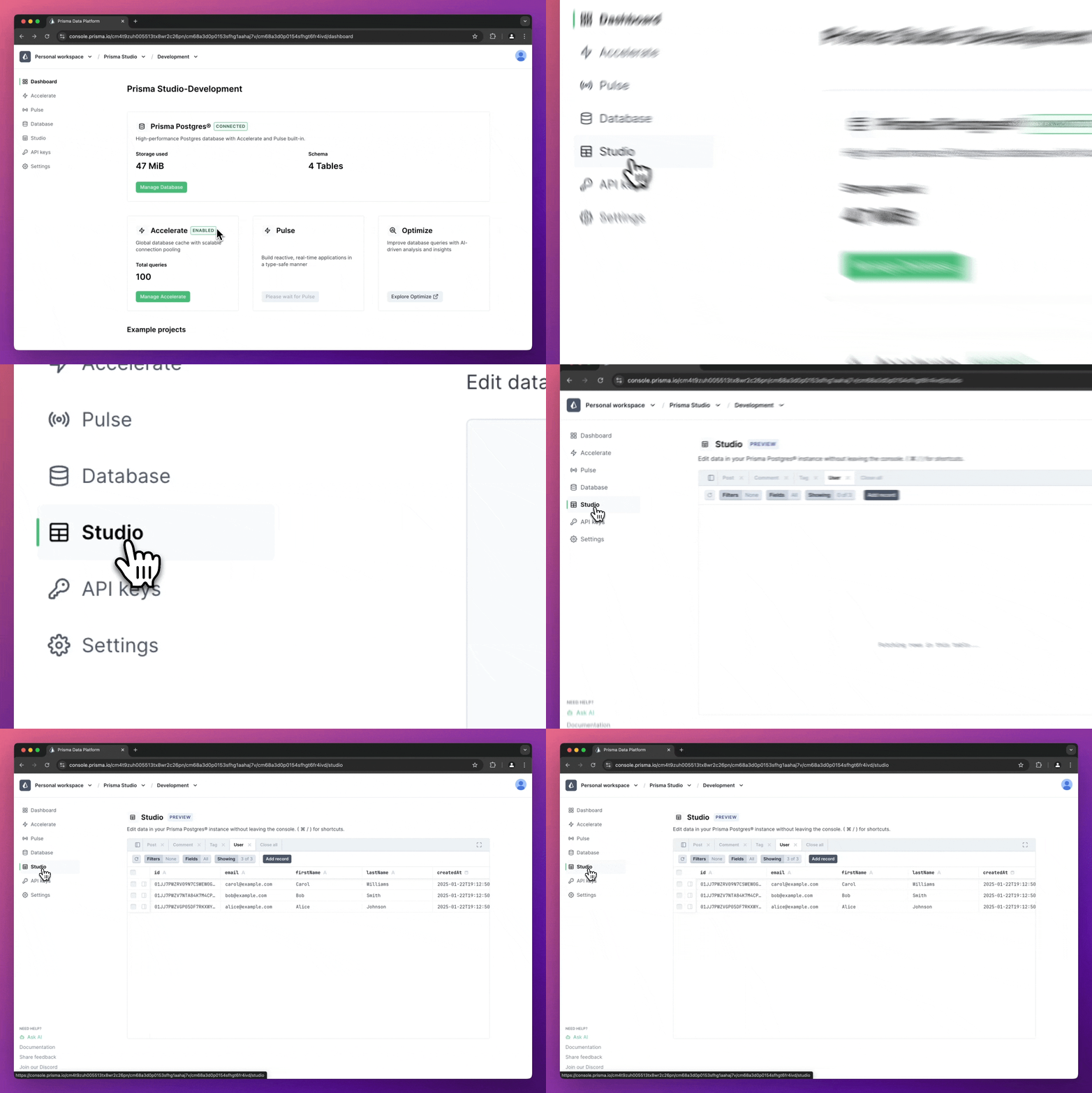
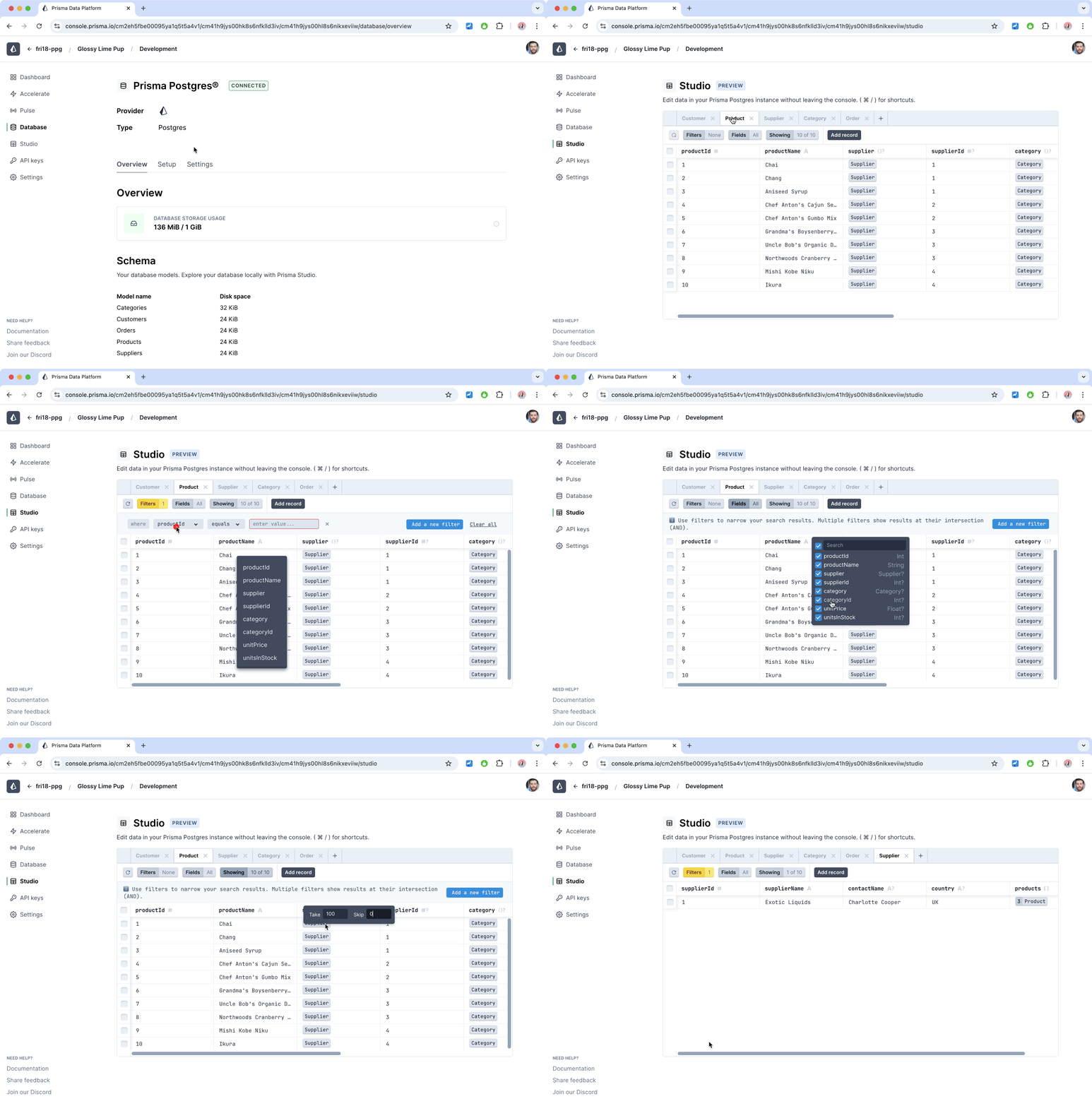
Prisma is a TypeScript database toolkit built around a schema-first workflow. Prisma ORM generates a typed client with autocomplete and compile-time query checks, while Prisma Postgres provides managed PostgreSQL with connection pooling. Prisma Compute deploys TypeScript applications as long-lived processes near the database.
›What are the pros and cons of Prisma?
Strengths
The generated client catches many query errors at compile time
The schema-first workflow connects models, migrations, and application queries
Prisma ORM is free and open source
Prisma Postgres includes managed PostgreSQL and connection pooling
Prisma Compute supports long-lived processes without separately stitching together infrastructure
Trade-offs
The ORM is less suitable for workloads that require extensive raw SQL control
Prisma Postgres uses operation-based pricing rather than charging only for compute time
Prisma Postgres quotas are shared across all databases in an account
Prisma Compute is free during Public Beta, with production billing expected when the beta ends
›What are Prisma’s key features?
Schema-first data models that generate a TypeScript client
Type-safe queries with autocomplete and compile-time guarantees
Prisma Migrate for generating reviewable database migration files
Managed PostgreSQL with built-in connection pooling
Container-based Prisma Compute runtime for long-running APIs and AI agents
Support for PostgreSQL, MySQL, SQLite, MongoDB, CockroachDB, and Microsoft SQL Server
›What are the best use cases for Prisma?
Build REST APIs with typed database queries
Define application models and generate migration files for schema changes
Deploy TypeScript APIs that need long-running requests or streaming
Run AI agents close to a managed PostgreSQL database
Use a generated client in Node.js and TypeScript applications
›What is the pricing for Prisma?
| Plan | Price | Details |
|---|---|---|
| Free | $0 / month | Prisma Postgres includes 100,000 operations, 500 MB storage, and 50 databases. |
| Starter | $10 / month | Includes 1,000,000 Prisma Postgres operations, 10 GB storage, 1,000 databases, spend limits, and seven-day backups. |
| Pro | $49 / month | Includes 10,000,000 Prisma Postgres operations, 50 GB storage, 1,000 databases, spend limits, and seven-day backups. |
| Business | $129 / month | Includes 50,000,000 Prisma Postgres operations, 100 GB storage, 1,000 databases, spend limits, and 30-day backups. |
Prisma ORM will always be free. Additional Prisma Postgres operations and storage are billed at usage rates, and Prisma Compute is free during Public Beta.
Checked 2026-08-22 · source
›Who is Prisma best for?
developersA strong fit for TypeScript and Node.js developers who want typed database access generated from a schema.
small teamSmall teams can start with the free ORM and add managed PostgreSQL when they need hosted database infrastructure.
enterpriseEnterprise teams can use the Business plan for higher operation and storage allowances, with custom terms available for high-volume workloads.
Not for
- Teams that need extensive raw SQL control should evaluate a lower-abstraction database toolkit.
- Teams deploying primarily to Cloudflare Workers may prefer a tool with stronger edge performance.