

Forward Future Tools Library

SynthID
SynthID embeds and detects invisible marks in AI-generated media, helping publishers and content platforms verify whether images or videos came from generative AI.
Try SynthID →
deepmind.google·Contact Sales



›What is SynthID?
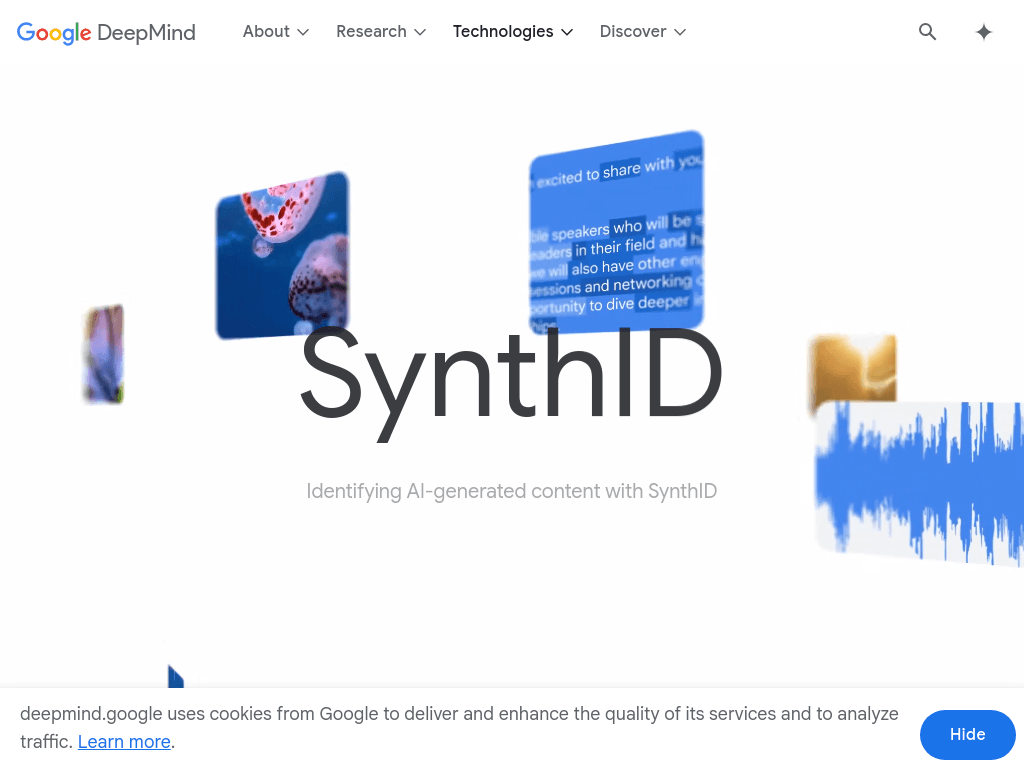
SynthID is a Google DeepMind tool for watermarking and identifying AI-generated content. It embeds a detectable signal into generated media so downstream systems can check its origin without changing the visible appearance of an image. Google has also expanded partnerships to support use across AI content workflows.
›What are the pros and cons of SynthID?
Strengths
The watermark is invisible and does not change an image's visible appearance
The signal is designed to survive many common edits
It provides a way to check AI origin after content leaves the generating tool
Google is expanding adoption through partnerships with other AI and media companies
Trade-offs
SynthID does not by itself solve AI-driven disinformation
The proprietary, black-box design creates transparency and compliance concerns for some enterprise users
Aggressive edits and adversarial attacks can reduce watermark resilience
›What are SynthID’s key features?
Embeds invisible, detectable watermarks in AI-generated content
Identifies content carrying a SynthID signal
Uses a pixel-level signal that does not visibly alter images
Designed to remain detectable after common edits such as resizing or recompression
Supports labeling AI-generated content in publisher and platform workflows
›What are the best use cases for SynthID?
Checking whether an image or video was generated by AI
Helping publishers label synthetic media before publication
Supporting provenance checks on content distributed through online platforms
Adding an AI-origin signal alongside metadata-based approaches such as C2PA
›What is the pricing for SynthID?
Contact Sales
›Who is SynthID best for?
publishersUseful for checking and labeling AI-generated images and videos in editorial workflows.
content platformsProvides an origin signal that platforms can use when reviewing or labeling synthetic media.
journalistsCan support AI-origin checks, but it should not be treated as a complete answer to disinformation.
Not for
- Teams that need an open, independently auditable watermarking standard may prefer a less proprietary approach.
- Organizations seeking a complete disinformation-detection system should not rely on SynthID alone.