

Forward Future Tools Library

AssemblyAI
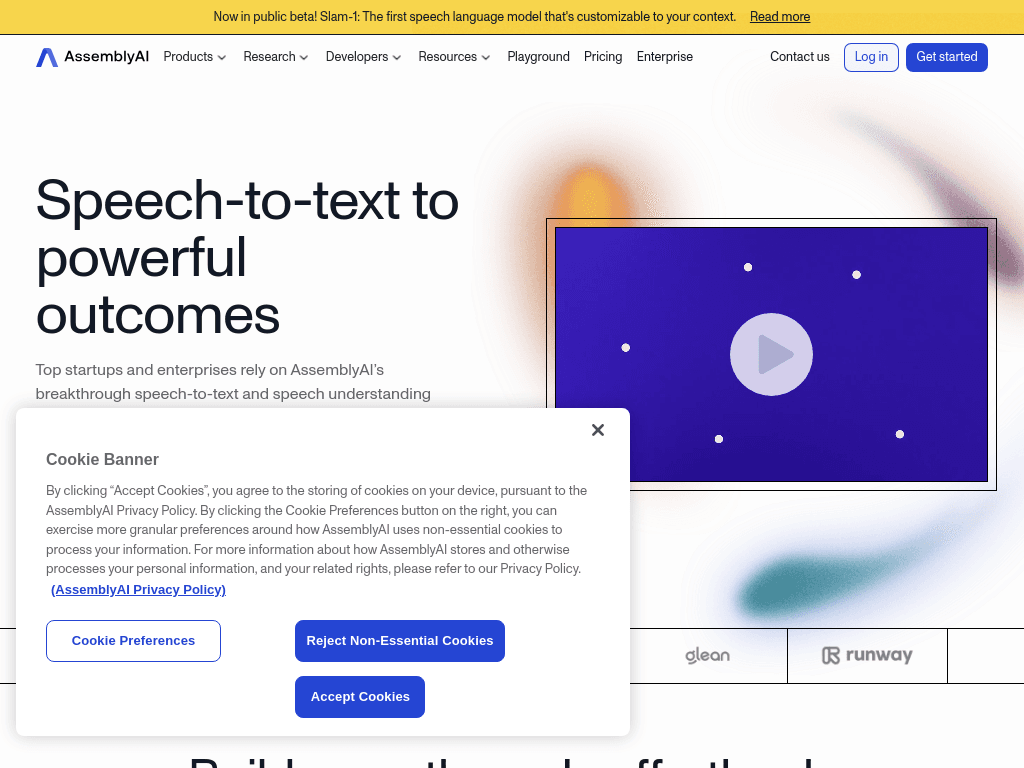
AssemblyAI provides APIs for transcription, speech understanding, guardrails, and voice agents, aimed at developers building speech features into their own products.
Try AssemblyAI →
assemblyai.com·Contact Sales
›What is AssemblyAI?
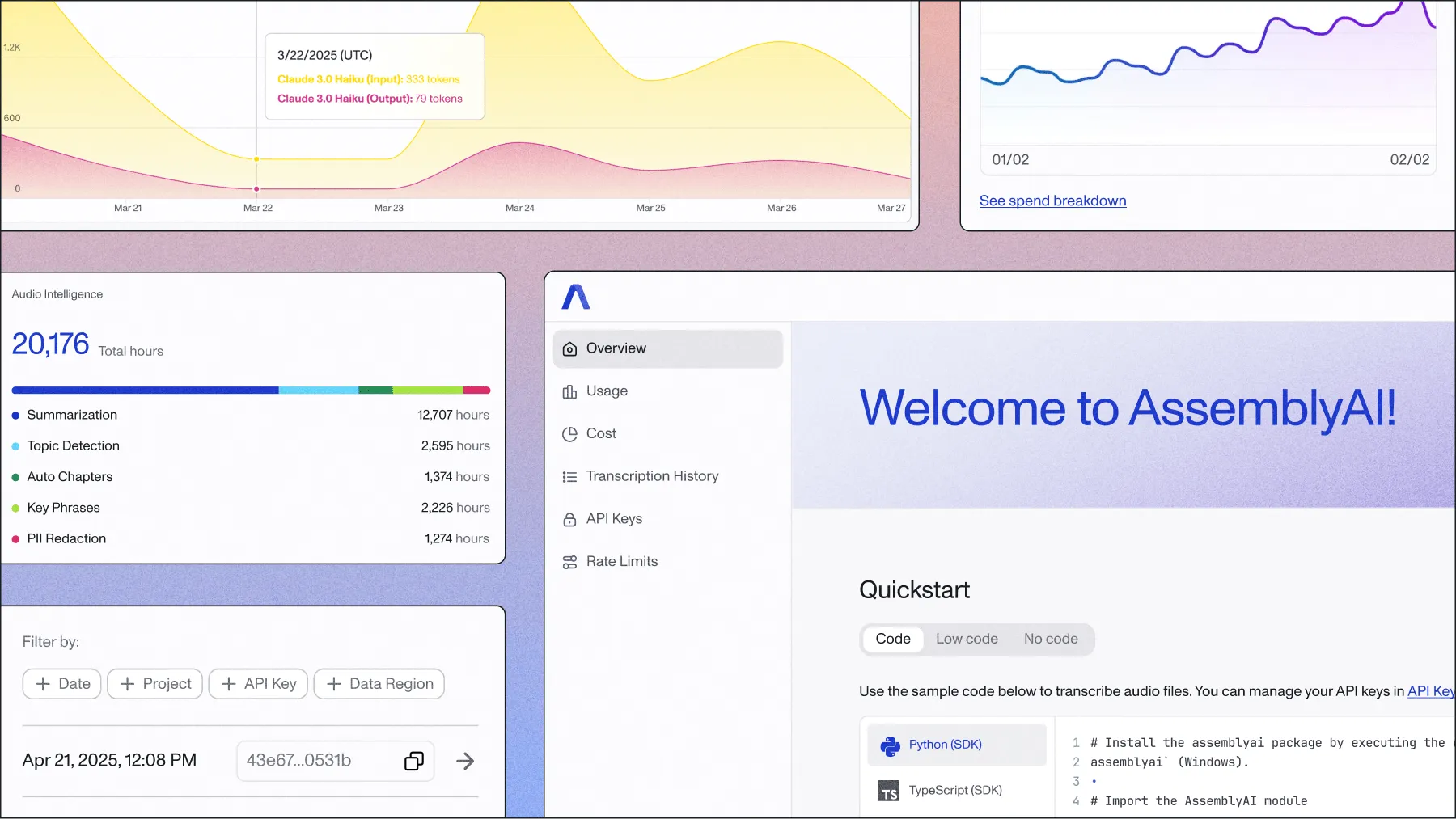
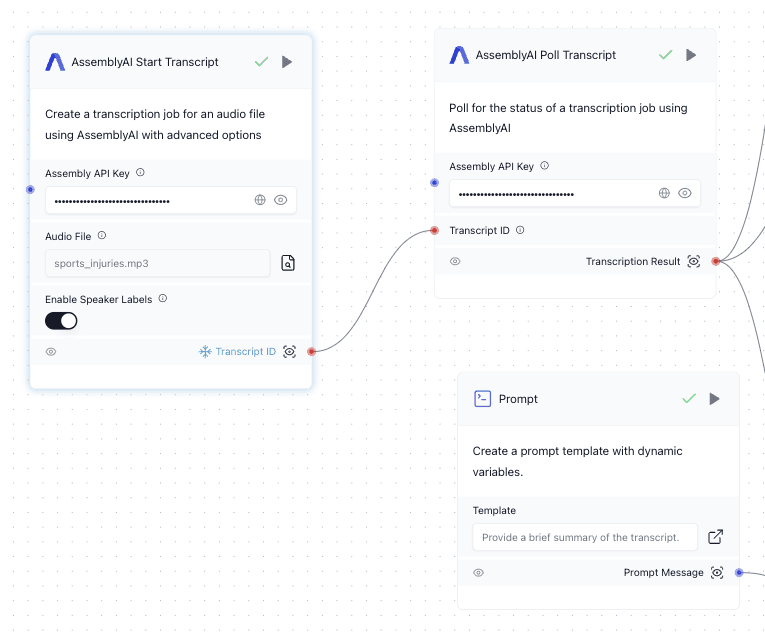
AssemblyAI is a developer-focused speech AI platform with APIs for pre-recorded and real-time speech-to-text. It also provides speech understanding, voice agent infrastructure, guardrails, and an LLM Gateway for tasks such as summaries, entity extraction, and sentiment analysis.
›What are the pros and cons of AssemblyAI?
Strengths
Offers both pre-recorded and real-time transcription APIs
Combines transcription, speech understanding, guardrails, and LLM routing in one developer platform
Provides speaker identification, automatic language detection, custom spelling, and word-level timestamps
Includes API documentation, cookbooks, code examples, a changelog, and a status page
Trade-offs
It is not a turnkey meeting or note-taking application, so users need an integration or developer team
Costs can increase when diarization, medical mode, summarization, redaction, moderation, and LLM Gateway usage are added
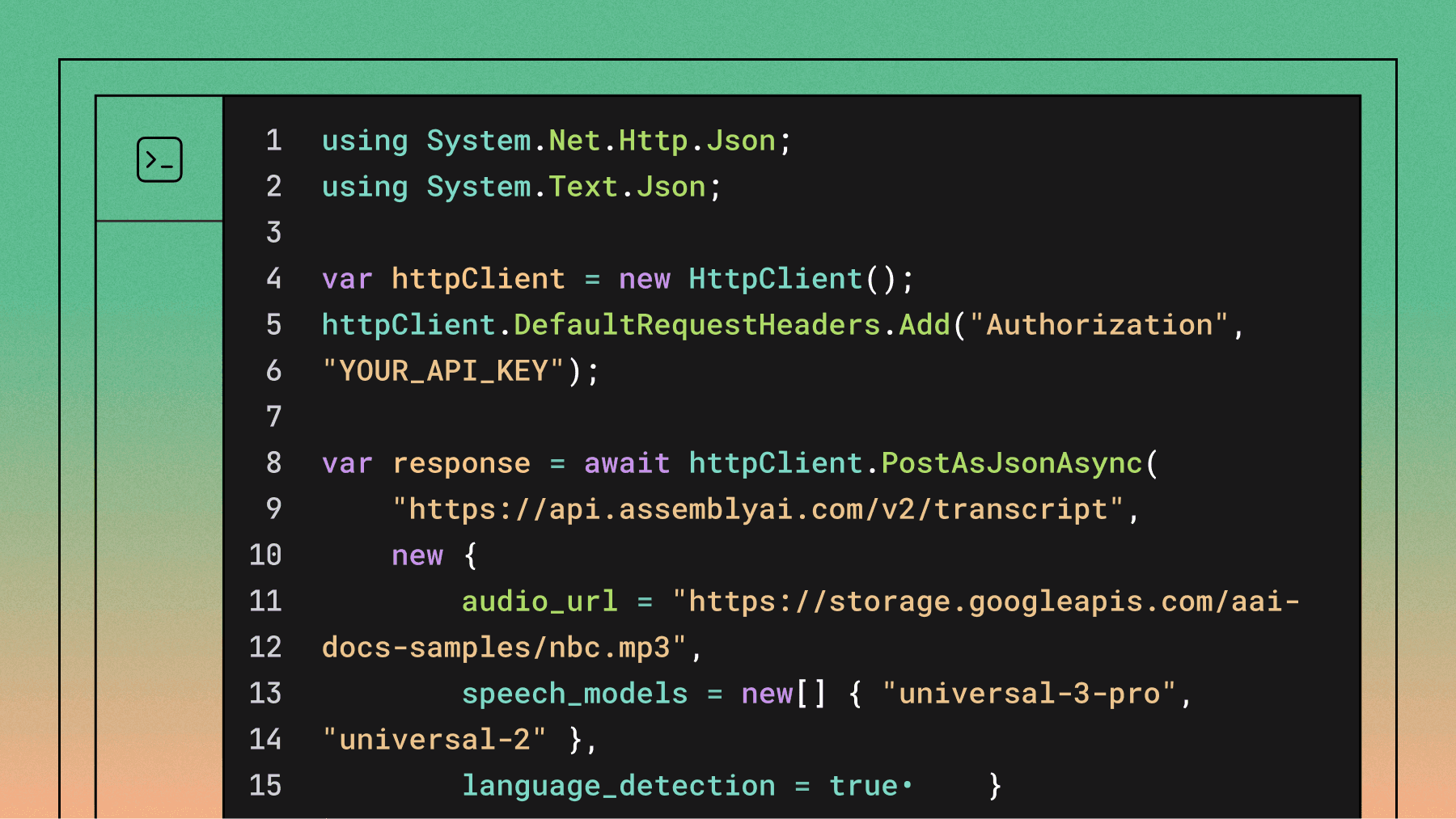
Universal-3 Pro has narrower listed language support than Universal-2, which may require model routing for global products
›What are AssemblyAI’s key features?
Pre-recorded speech-to-text transcription
Real-time speech-to-text through a WebSocket API
Speaker diarization, language detection, profanity filtering, custom vocabulary, and custom spelling
Speech understanding for entities, topics, key phrases, and sentiment
Voice AI guardrails, including content moderation and PII redaction
LLM Gateway for routing transcript-related tasks to models such as GPT, OpenAI, and Gemini
›What are the best use cases for AssemblyAI?
Add live transcription to voice-enabled products
Transcribe recorded meetings, calls, podcasts, and other audio
Analyze customer conversations for topics, sentiment, entities, and key phrases
Build voice agents without assembling separate transcription and turn-detection infrastructure
Support medical transcription, dictation, agent assistance, and AI scribe applications
›What is the pricing for AssemblyAI?
Contact Sales
›Who is AssemblyAI best for?
developersA strong fit for developers embedding transcription, speech analysis, or voice agents into software through APIs.
small teamSmall product teams can use the unified APIs to avoid building separate speech, moderation, and LLM components.
enterpriseEnterprise teams can use the platform for production-scale voice applications, including call analytics and medical transcription.
content creatorsUseful for developers supporting podcast or video transcription and transcript-based summaries, but not as a standalone editing application.
Not for
- Non-technical users who want a ready-made meeting recorder or note-taking app without building an integration
- Global products that need the broadest language coverage from a single speech model