
Forward Future Tools Library

Cursor logo

Cursor

Cursor is an AI-native code editor that handles multi-file coding tasks, autonomous agent work, and codebase-aware assistance for solo developers and software teams.

Try Cursor

cursor.com·Free + paid plans·Checked 2026-08-30

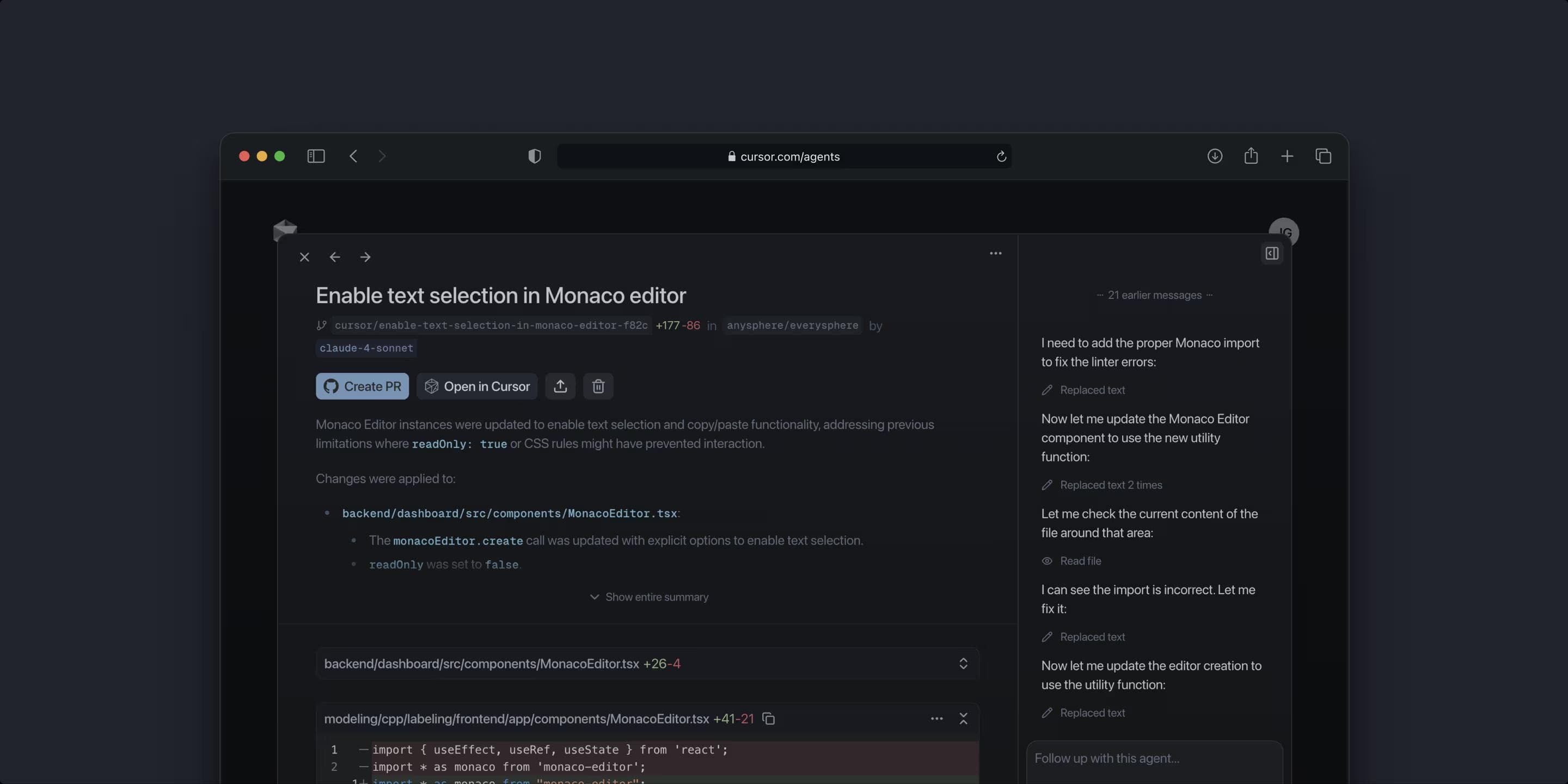
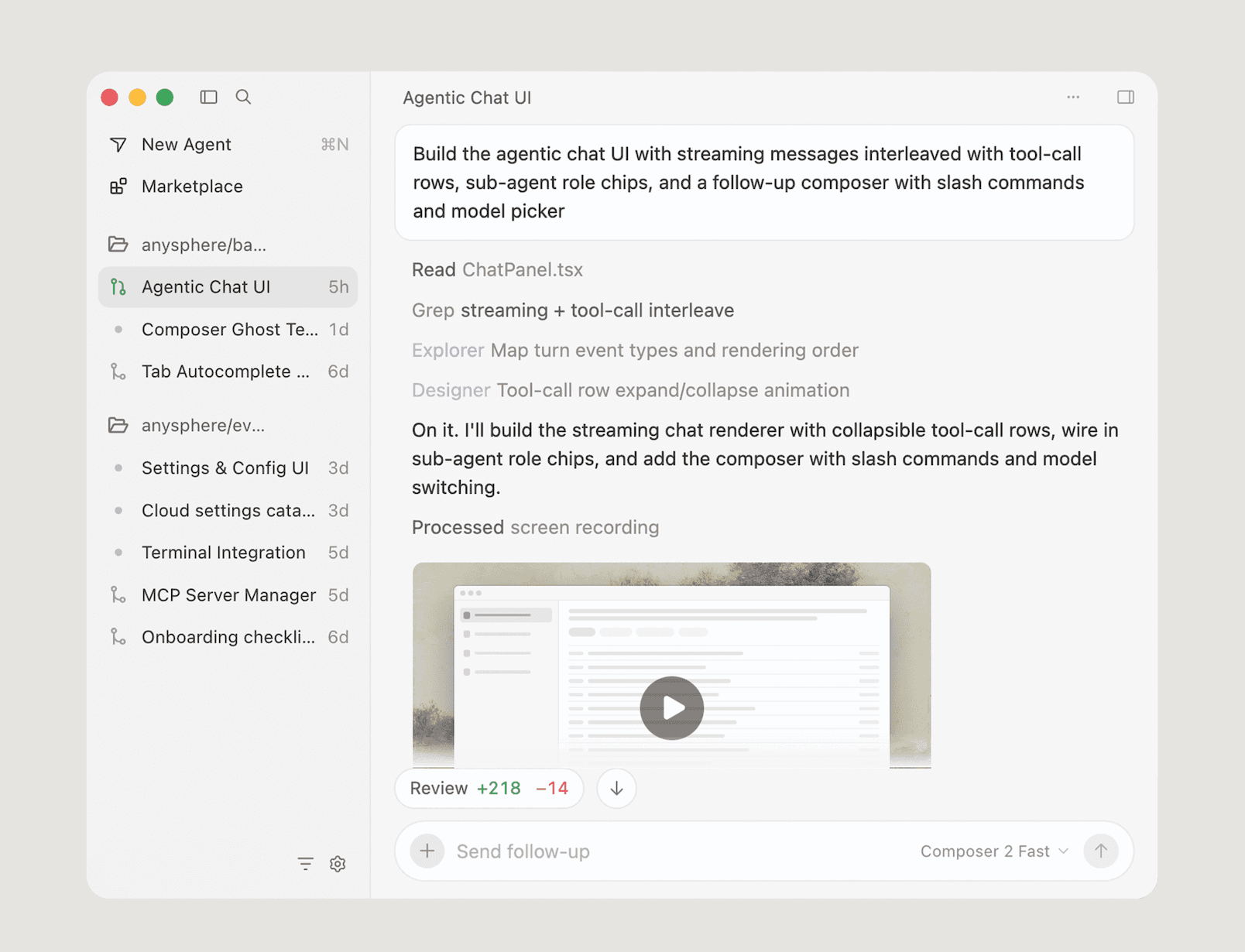
Cursor screenshotAI Coding Agent for Building Ambitious SoftwareCursor on web and mobile · CursorBugbot, Background Agent access to everyone, and one-click MCP install ·  CursorMeet the new Cursor · Cursor
Cursorcursor.sh
Cursor screenshot
Cursorcursor.sh

What is Cursor?

Cursor is a standalone code editor based on VS Code with AI coding agents built into the editor and terminal. It can plan and implement changes across files, search indexed codebases, run tasks autonomously, and support reviews through Slack and GitHub. Cloud agents can work in parallel and return changes for review.

What are the pros and cons of Cursor?

Strengths

Handles multi-file refactoring and codebase-aware suggestions
Agents can work autonomously, in parallel, and across end-to-end tasks
Supports desktop and CLI workflows plus Slack and GitHub collaboration
Offers codebase indexing and semantic search
Privacy Mode provides a no-training guarantee for code data

Trade-offs

Usage-based billing can make costs unpredictable after included model usage is consumed
Performance can degrade on very large codebases
Code is processed in the cloud, even though Privacy Mode changes training and retention protections
Teams that require a different IDE may need to switch to Cursor's standalone editor

What are Cursor’s key features?

AI agents that plan and implement multi-file coding tasks
Codebase indexing with semantic search
Cursor Desktop and Cursor CLI interfaces
Cloud agents that run tasks autonomously and in parallel
Agent access through the terminal, Slack, and GitHub pull-request reviews
Privacy Mode that prevents code data from being used for training by Cursor or its model providers

What are the best use cases for Cursor?

Refactor an API schema across route handlers, types, and frontend components
Build a landing page from attached product or project documentation
Add algorithms and fix related parsers across an existing codebase
Create an interactive research dashboard with realtime charts and deploy it to staging
Hand off implementation tasks to agents while reviewing the resulting plans and changes

What is the pricing for Cursor?

PlanPriceDetails
HobbyFreeNo credit card required, with limited Agent requests and access to Composer.
Pro$20 / mo.Adds extended Agent limits, access to frontier models, Grok Bot, MCPs, skills, hooks, cloud agents, and usage-based Bugbot.
Teams$40 / user / mo.Adds centralized billing and administration, shared team context for cloud agents and automations, usage analytics, team-wide privacy mode, SAML/OIDC SSO, and agentic code reviews.

Pro+ and Ultra plans are also available. Every plan includes a set amount of model usage, with additional on-demand usage billed in arrears. Prices exclude applicable taxes.

Checked 2026-08-30 · source

Who is Cursor best for?

soloSolo builders working on multi-file features can use agents to implement tasks while retaining review control.
small teamSmall development teams get shared agent context, team administration, privacy controls, and GitHub review support.
developersDevelopers who want an AI-native editor benefit from semantic code search, autonomous changes, and CLI access.
enterpriseEnterprise organizations can use pooled usage, SSO, SCIM, access controls, audit logs, and service accounts.
Not for
  • Teams locked to a specific non-VS-Code IDE for policy reasons should avoid adopting a standalone editor.
  • Developers who only need occasional chat help outside the editor may find Cursor more than they need.
  • Buyers who need predictable fixed usage costs should account for on-demand billing after included model usage is exhausted.


What are the best Cursor alternatives?

Where can I try Cursor?

Open cursor.com