Forward Future Tools Library

FerryAPI
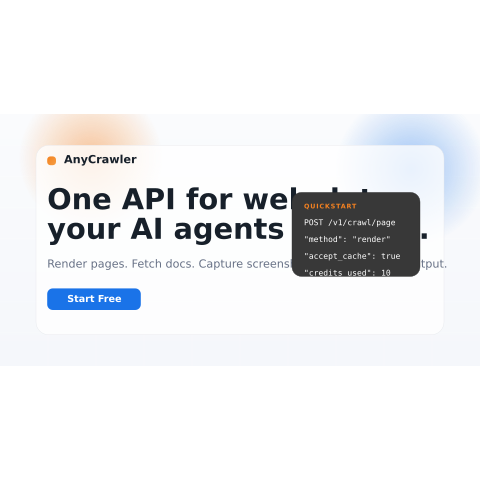
FerryAPI gives developers and production teams an OpenAI-compatible gateway for routing supported models, managing customer API keys and quotas, and tracking prepaid usage.
Try FerryAPI →
ferryapi.io·Usage-based
›What is FerryAPI?
FerryAPI is an OpenAI-compatible AI API gateway for businesses using models such as DeepSeek, Qwen, Kimi, and MiMo. It provides provider account pools, prepaid USD balance, usage billing, customer API key management, and quota controls for applications that use chat-based AI APIs.
›What are the pros and cons of FerryAPI?
Strengths
OpenAI-compatible APIs can reduce migration work for existing integrations
Supports multiple model families through one gateway
Combines prepaid balance and usage records for cost visibility
Provides customer API keys and quotas for production applications
Offers provider account pools for managing model access
Trade-offs
Usage-based billing makes costs depend on model and token consumption
The service is API-focused, so teams need to build or connect their own application workflows
›What are FerryAPI’s key features?
OpenAI-compatible API access for existing client integrations
Access to supported DeepSeek, Qwen, Kimi, and MiMo models
Provider account pools for routing model usage
Prepaid USD balance and token-based usage billing
Customer API key management and quota controls
›What are the best use cases for FerryAPI?
Adding AI-powered support features to a SaaS product
Building translation and summarization workflows
Generating or classifying content through an application API
Routing AI usage for internal automation and agentic business tools
›What is the pricing for FerryAPI?
Usage-based
›Who is FerryAPI best for?
developersA fit for developers who want to route existing OpenAI-style clients through multiple supported models.
small teamSmall teams can use prepaid balance, customer keys, and quotas to add AI features without managing separate provider integrations.
enterpriseProduction teams with customer-facing AI workloads may benefit from provider pools, usage billing, and account-level controls.