

Forward Future Tools Library

Pythagora
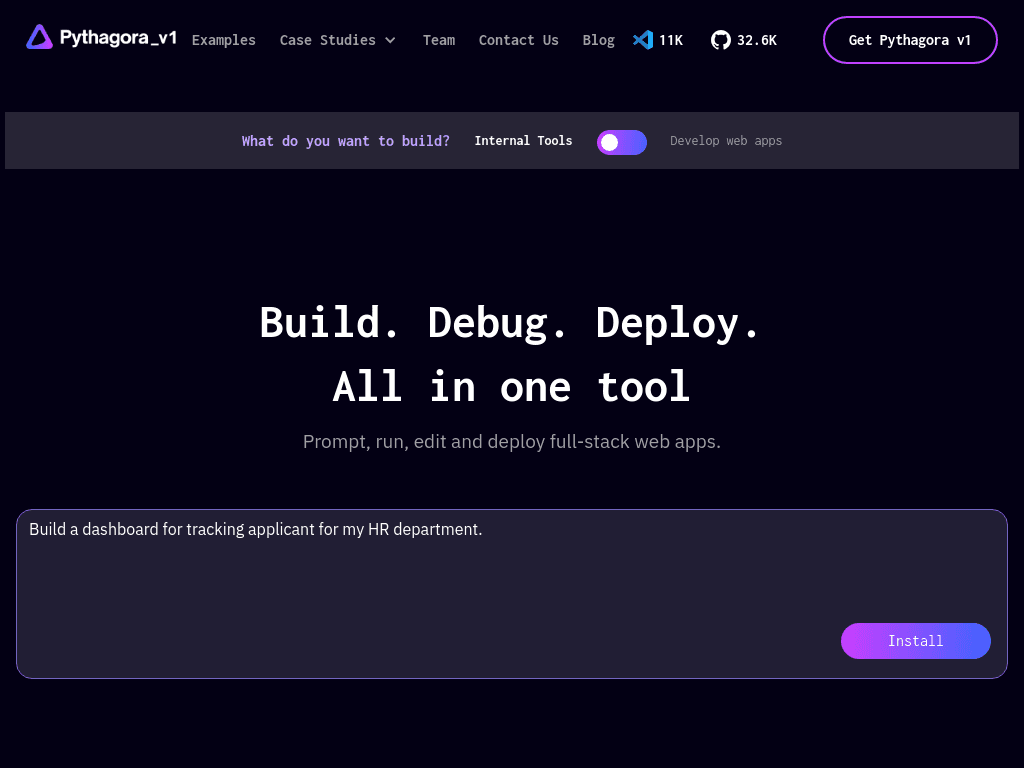
Pythagora, now presented on its site as Pazi, turns business ideas into web apps and supports planning, coding, debugging, testing, and deployment for solo builders and development teams.
pazi.ai·From $25/mo·Checked 2026-08-27
›What is Pythagora?
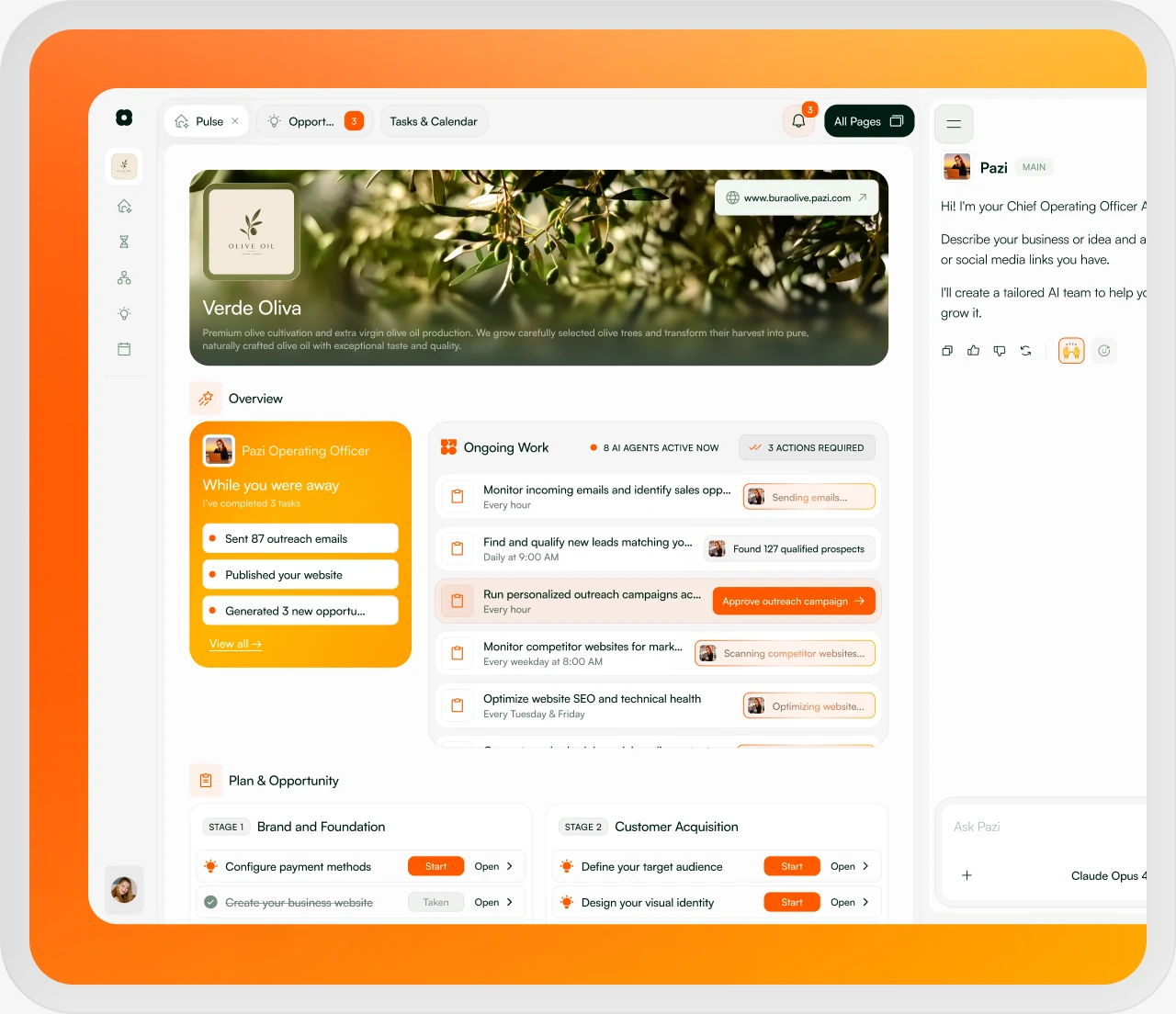
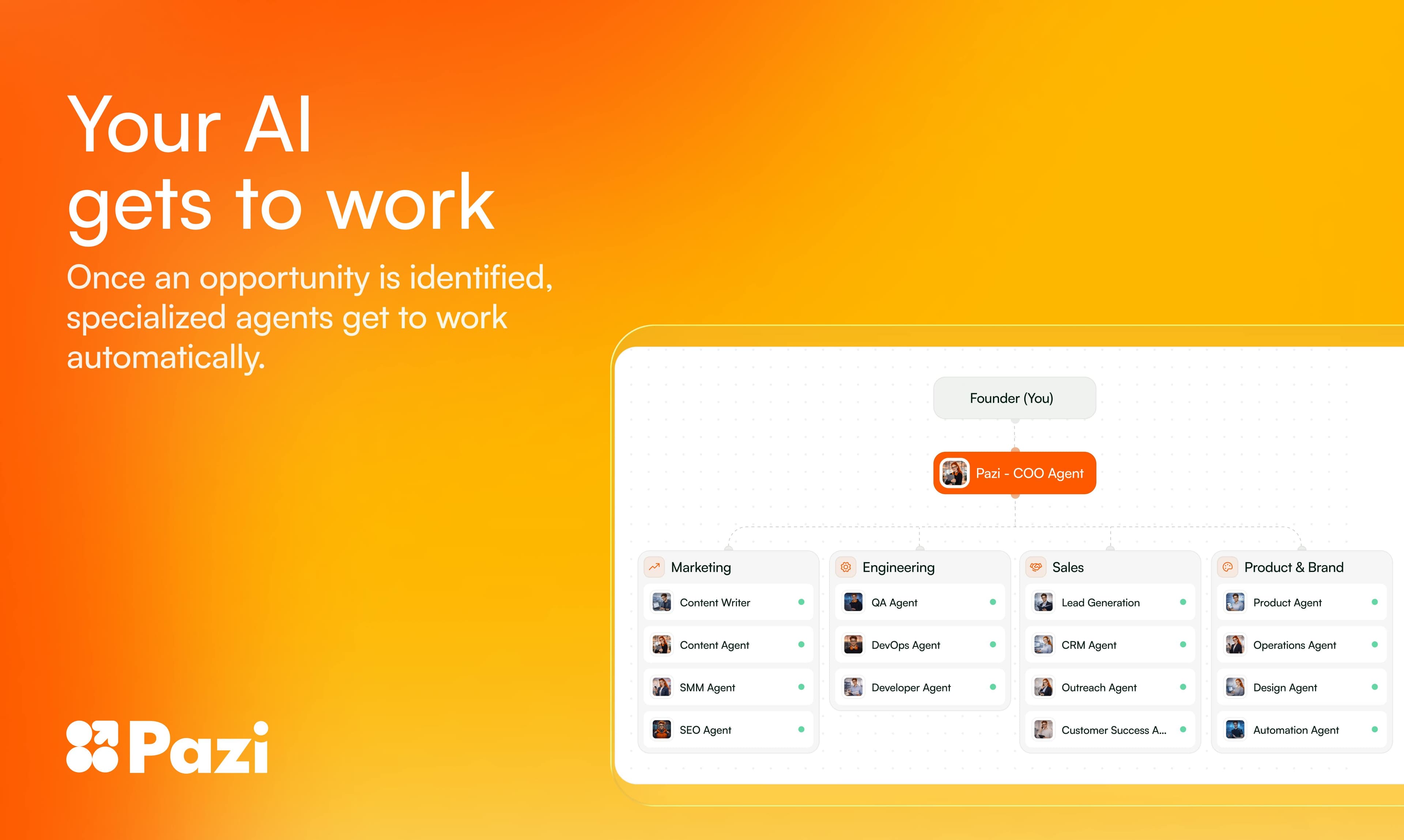
Pythagora is an AI-assisted platform for turning natural-language app descriptions into full-stack web applications. It generates React front ends and Node.js back ends, supports structured planning and iteration, detects issues, suggests fixes, and deploys preview and production environments. The current site presents the product as Pazi, with broader workflows for launching businesses and managing opportunities.
›What are the pros and cons of Pythagora?
Strengths
Trade-offs
›What are Pythagora’s key features?
›What are the best use cases for Pythagora?
›What is the pricing for Pythagora?
| Plan | Price | Details |
|---|---|---|
| 12.5K credits | $25/mo | Includes the Pro feature set, multiple businesses, team invitations, and private businesses. |
| 25K credits | $50/mo | Includes the Pro feature set with 25,000 monthly credits shared across businesses. |
| 50K credits | $100/mo | Includes the Pro feature set with 50,000 monthly credits shared across businesses. |
| 100K credits | $200/mo | Includes the Pro feature set with 100,000 monthly credits shared across businesses. |
| 250K credits | $500/mo | Includes the Pro feature set with 250,000 monthly credits shared across businesses. |
The pricing page says yearly billing saves 20%. Credits are shared across all businesses, and larger credit amounts can be selected when needed.
Checked 2026-08-27 · source
›Who is Pythagora best for?
- Teams that need Python back-end generation immediately should wait until that support is available.
- Builders who want to avoid technical review and debugging may find the generated applications too hands-on.
›What are the best Pythagora alternatives?
 BubbleChoose this instead if you want a no-code platform for creating scalable applications.→
 BoltChoose this instead if you want to prompt, run, edit, and deploy full-stack web and mobile applications through Supabase Edge Functions.→
 CursorChoose this instead if your priority is AI assistance directly inside a code editor.→
 LangChain→