

Forward Future Tools Library
ResearchRabbit
ResearchRabbit maps academic literature from seed papers, helping researchers discover related work, organize references, and follow emerging topics.
Try ResearchRabbit →
researchrabbit.ai·Free + paid plans·Checked 2026-08-17
›What is ResearchRabbit?
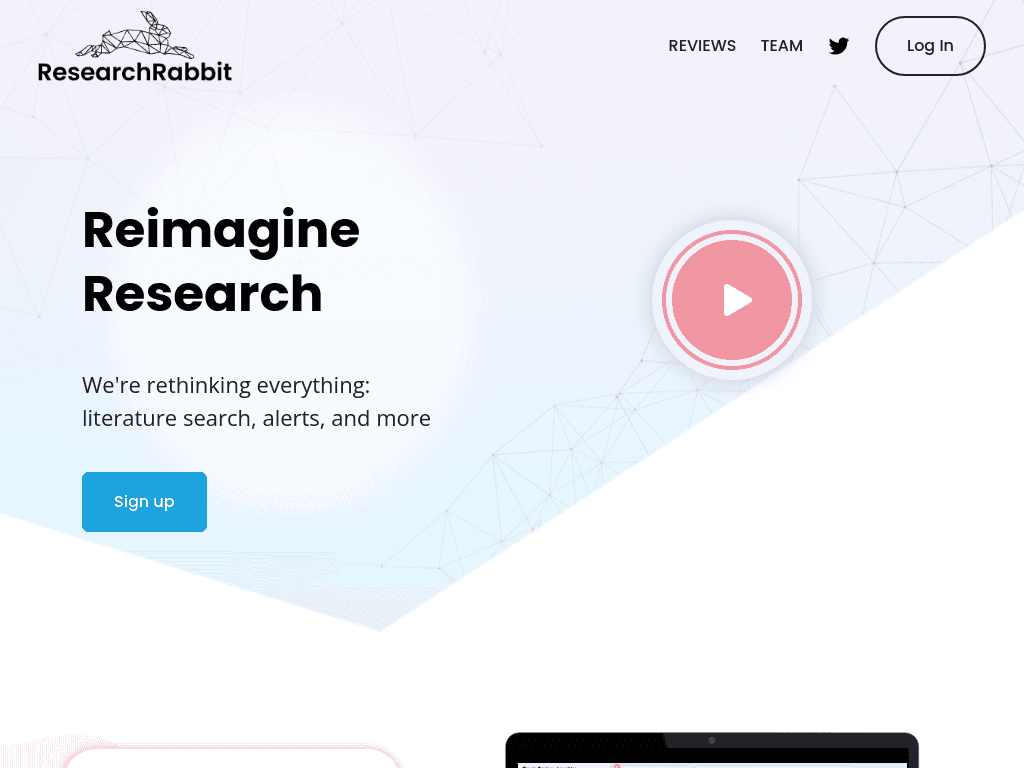
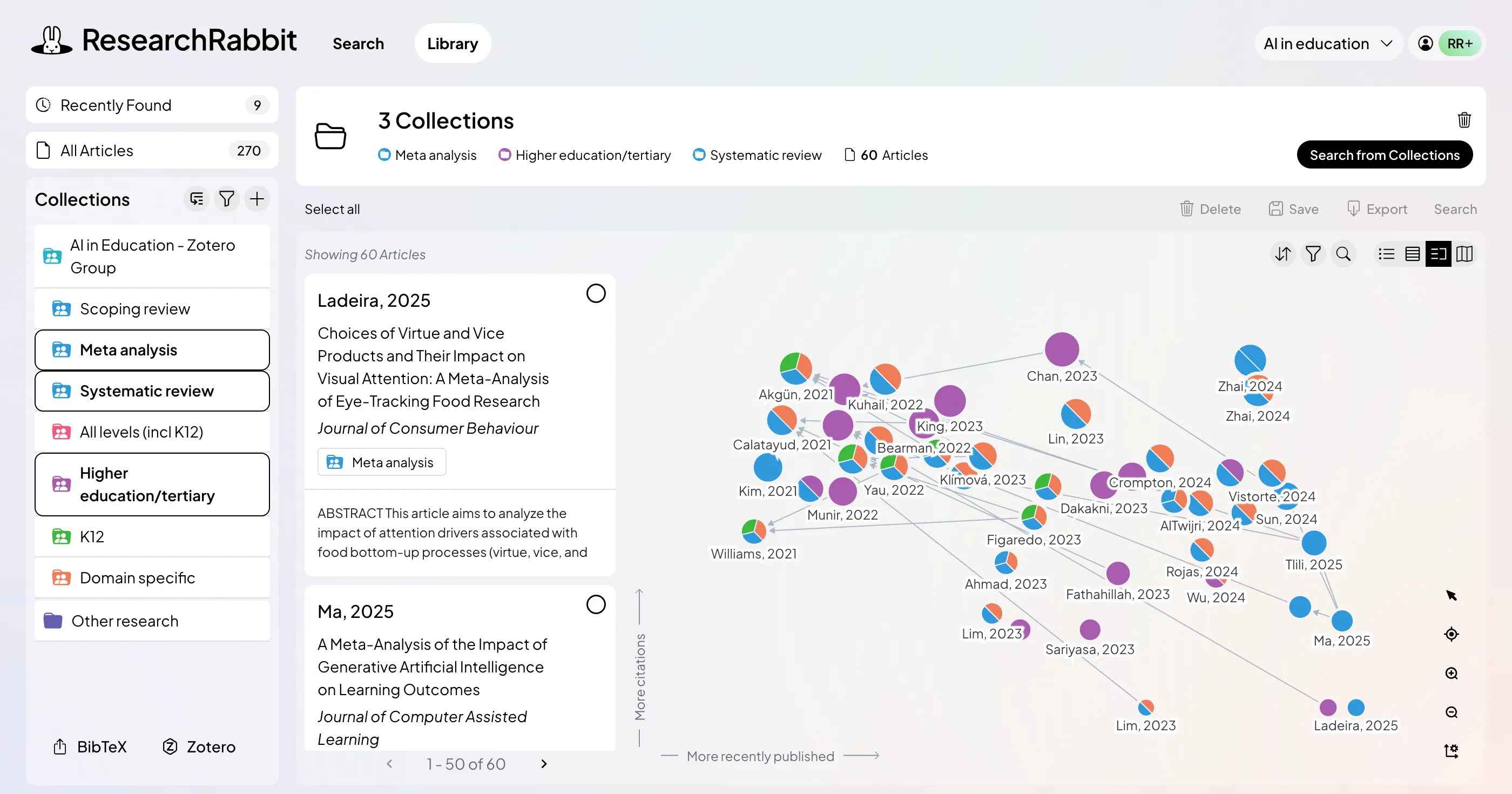
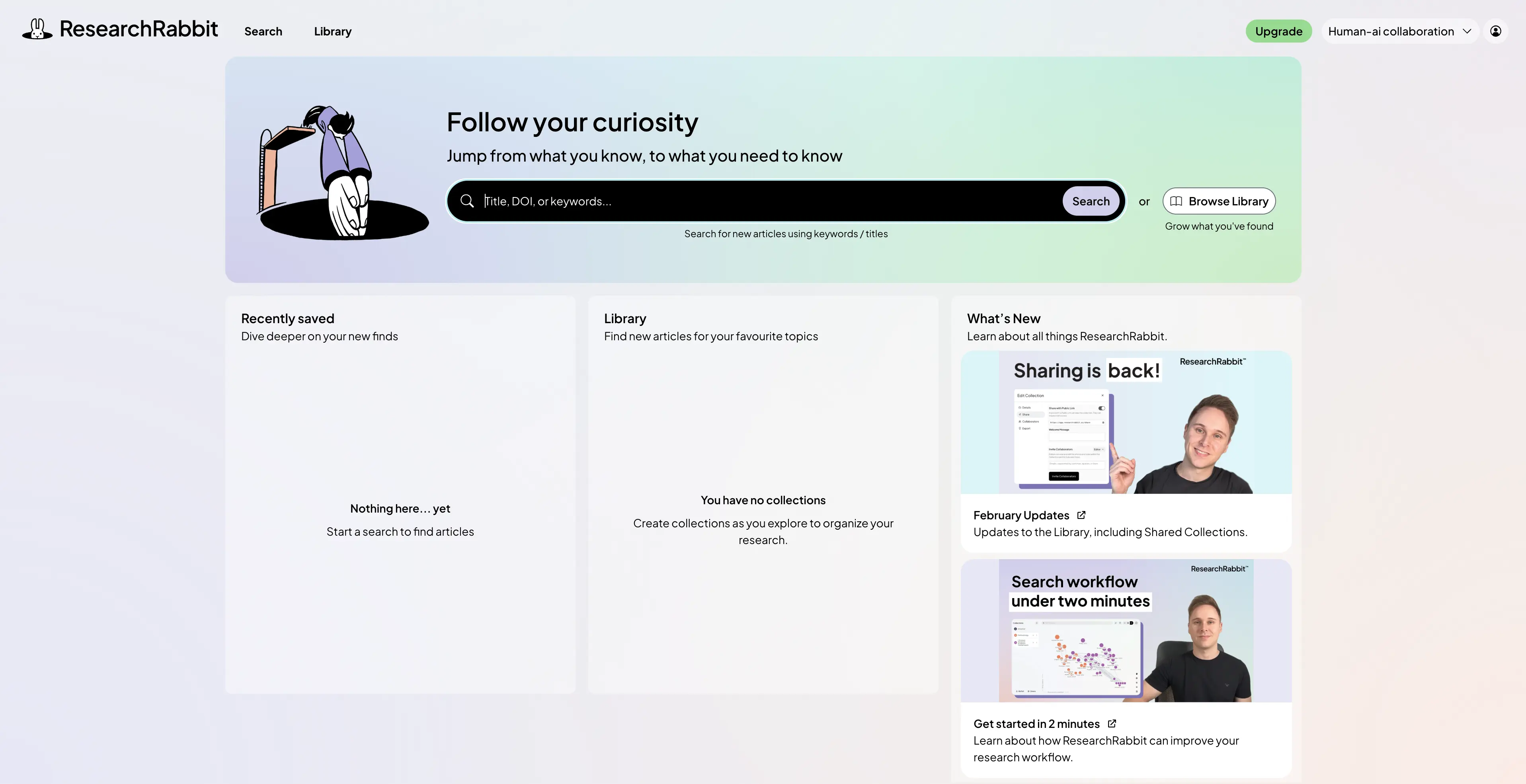
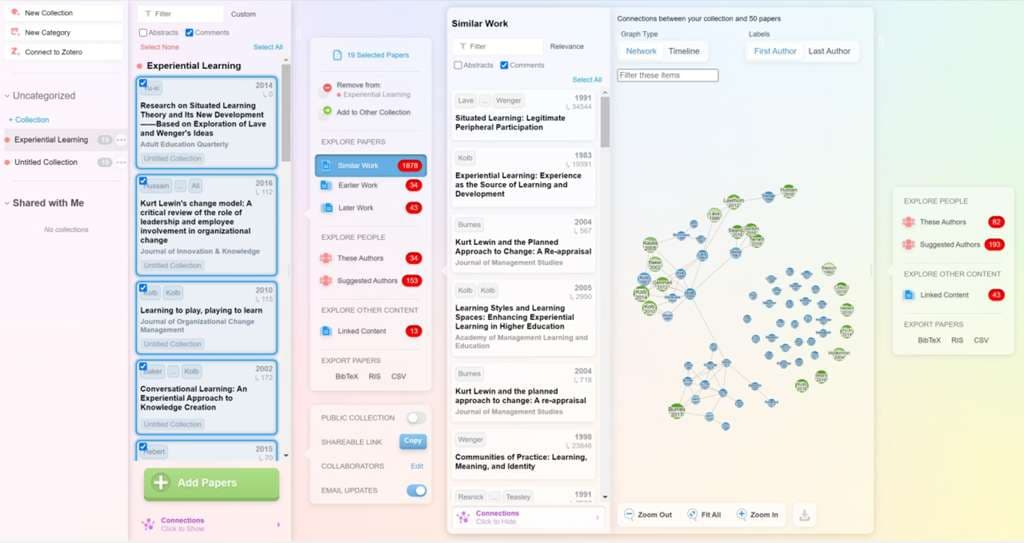
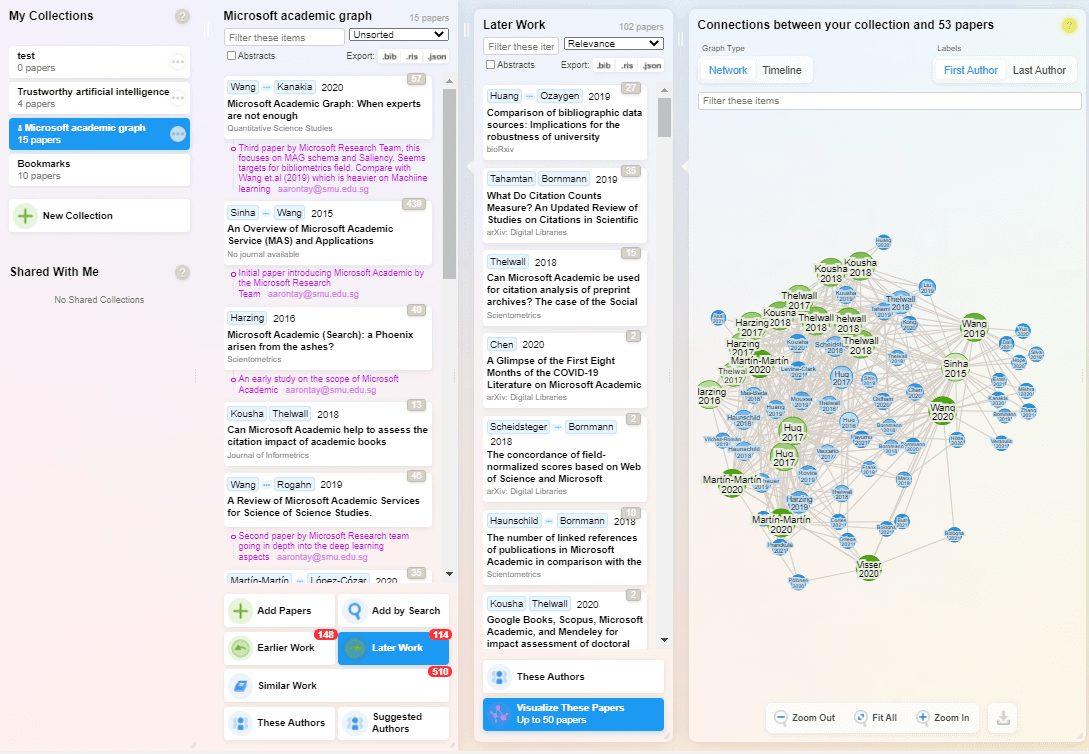
ResearchRabbit is a web-based tool for discovering and organizing academic literature. Users start with a paper, then expand their search through related works, authors, and topics. It also connects papers, notes, and collections, with visualizations showing how research areas relate and change over time.
›What are the pros and cons of ResearchRabbit?
Strengths
Free plan includes unlimited searches, collections, and collaboration by shared collection
Visual maps help reveal related papers, authors, citations, and topic clusters
Searches a database of more than 310 million academic papers
Integrates with Zotero and supports BibTeX and RIS workflows
Trade-offs
The product focuses on discovery and mapping rather than generating a complete written literature review
The free plan limits users to 50 seed articles
Advanced search controls, multiple projects, and up to 300 seed articles require RR+
Book and thesis coverage may be less suitable for research requiring extensive non-article sources
›What are ResearchRabbit’s key features?
Expand a literature search from seed papers to related works, authors, and emerging topics
Visualize citation, author, paper, and topic connections
Organize papers, notes, and thoughts in collections
Search across more than 310 million academic papers
Share collections for collaboration
Use Zotero integration and BibTeX or RIS export
Set Signals alerts for research updates and integrity monitoring
›What are the best use cases for ResearchRabbit?
Build a literature review from a small set of starting papers
Map authors, citations, and topic clusters across a research field
Track new publications and emerging topics
Organize references, notes, and ideas for a thesis or academic project
Share reading collections with research collaborators
›What is the pricing for ResearchRabbit?
| Plan | Price | Details |
|---|---|---|
| Free | $0, Forever! | Unlimited searches across 310+ million articles, unlimited libraries and collections, shared collection collaboration, up to 50 seed articles, and core search settings. |
| ResearchRabbit+ annual plan | $10* per month | Adds up to 300 seed articles, advanced search controls, multiple projects, Signals alerts, and faster support responses. |
| ResearchRabbit+ monthly plan | $12.5* per month | Includes the RR+ features for a month-to-month subscription. |
An Institution plan is available by contacting ResearchRabbit. Special country discount codes may apply.
Checked 2026-08-17 · source
›Who is ResearchRabbit best for?
academic researchersVisual citation and topic maps make it useful for exploring a research field from a known set of papers.
PhD studentsA free starting point for building thesis bibliographies and organizing literature review sources.
small teamShared collections support collaborative reading and reference discovery.
medical researchersCitation maps and author connections can help investigate specialized academic literature.
Not for
- Professionals seeking primarily non-academic sources should use a broader research or search tool.
- Users who need the software to write a complete literature review end to end should look elsewhere.
- Researchers whose projects depend heavily on books or theses may find the article-focused workflow limiting.
- Beginners wanting no learning curve may prefer a simpler search interface.
›What are the best ResearchRabbit alternatives?
 ElicitChoose this instead if your priority is evidence synthesis and literature-review assistance rather than visual exploration.→
 ConsensusChoose this instead if you want evidence-based answers extracted from scientific literature.→
 PaperLensChoose this instead if you want to explore a large collection of peer-reviewed research papers.→
 Cove→
Cove→